s](https://file-host.link/website/christmastreestand-b7kl4s/assets/blog-images/d58ffca2-20c7-4665-9d79-924db73dcfeb/1791456035044274_bba1e94bb539468886ef9da19a1b11ca/2x_360.webp)
Introduction
Your tree looked perfect at the lot. At home, under an 8-foot ceiling, it suddenly looks two feet short. The instinct is to grab whatever's nearby — a crate, a stack of books, an old end table — and prop the stand on top.
That's where things go wrong. An improvised lift can tip, slide, or crush under water weight, and it can gouge your floor in the process.
A Christmas tree stand height riser is a stable platform placed beneath a properly secured tree stand. It changes the tree's position in the room. It does not replace the stand's job of gripping the trunk and holding water.
This article walks through calculating the height you actually need, comparing purpose-built platforms against DIY builds, and running a stability check before a single ornament goes on.
Key Takeaways
- Measure ceiling, tree, topper, stand, and riser together instead of eyeballing the tree alone.
- A riser must support the tree's total weight without raising its center of gravity.
- Purpose-built stands beat books, bricks, or unsecured furniture every time.
- Real trees still need full water access once raised for daily watering.
What Is a Christmas Tree Stand Height Riser?
A riser, a stand, and a collar solve three different problems, and mixing them up is how accidents happen.
- The stand grips the trunk and holds water. This is non-negotiable for a live tree.
- The riser sits under the stand to add elevation. It carries weight but doesn't touch the tree directly.
- The collar or skirt hides the base. It's decorative, not structural.
A useful test: if you removed the item and the tree would fall, it's structural and needs real engineering behind it. If removing it just exposes an unattractive stand, it's cosmetic.
Why Height Changes the Physics
Raising a tree raises its center of gravity. A bump that a floor-level tree would shrug off can tip a raised one, because the extra height acts as leverage. A wider, lower platform is almost always safer than a tall, narrow one. That holds true no matter how good the stand underneath it is.
Real vs. Artificial Trees
Real trees need continued access to the reservoir after elevation. You can't raise a tree in a way that makes daily watering awkward or impossible.
Artificial trees skip the water question but still need a riser that matches the stand's footprint and pole-support design. An undersized platform under an artificial tree's base is just as unstable as one under a live trunk.
Warning Signs to Walk Away From
- The platform rocks when you press on a corner.
- It's smaller than the stand's footprint.
- The material compresses or flexes under weight.
- Watering access is blocked.
- The tree leans even after the stand is fully tightened.
Any one of these means stop and rebuild, not "tighten it and see."
How to Choose the Right Riser Height and Stand
Start with math, not guesswork. The formula:
Tree height + stand height + riser height + topper clearance ≤ ceiling height.
Measure trim, ceiling fans, light fixtures, and sloped ceilings. A vaulted section can throw off a measurement taken from the room's tallest point.
Next, measure the stand itself:
- Footprint (width and depth)
- Trunk-hole diameter
- Base depth
- Water reservoir capacity
Then check the manufacturer's tree-size limit. A stand rated for a 9-foot tree shouldn't be pressed into service under a 14-foot one just because it "looks sturdy enough."
Low and Wide Beats Tall and Narrow
A platform that adds 4 inches across a 3-foot base is far more forgiving than one that adds 12 inches across a 15-inch base. Before buying or building anything, check the platform's load rating and construction.
The CPSC's holiday decoration safety guidance calls for a sturdy stand with wide-spread feet and recommends securing larger trees with guy-wires. Apply that same guidance to any raised setup, not just the stand alone.
Matching Stand to Tree Size
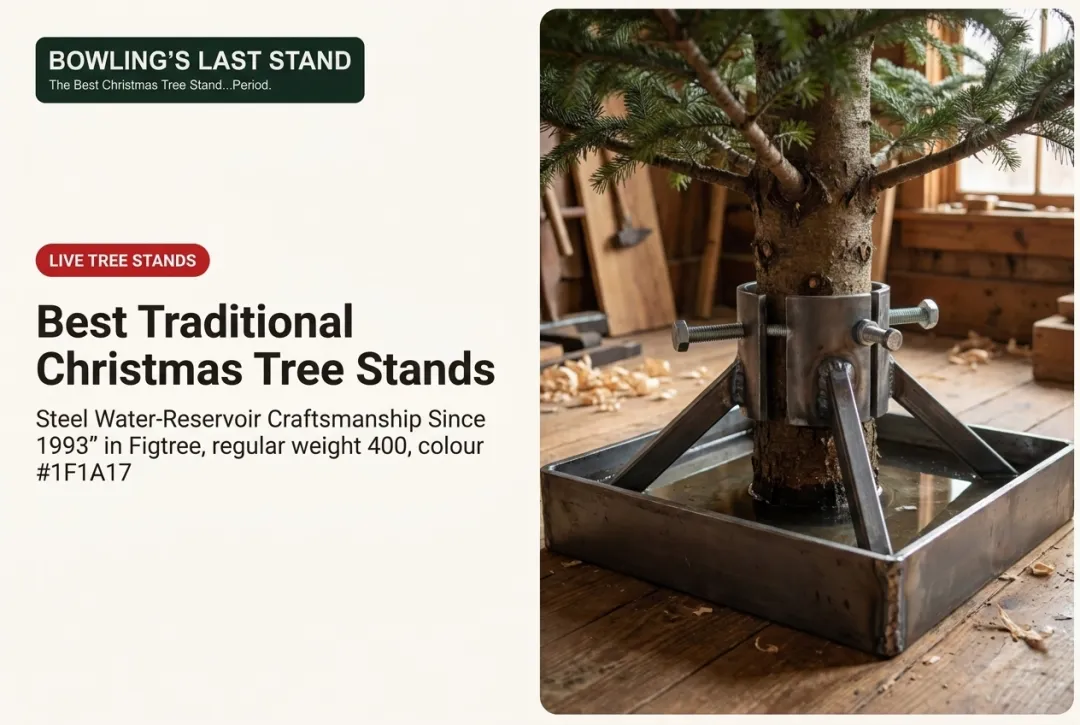
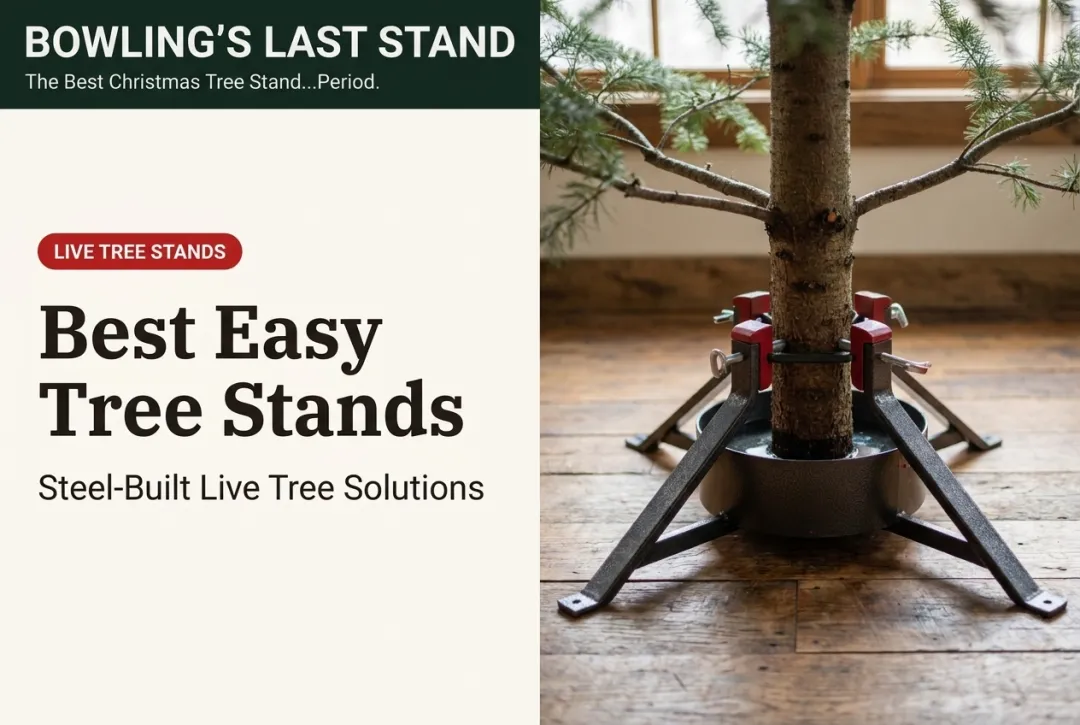
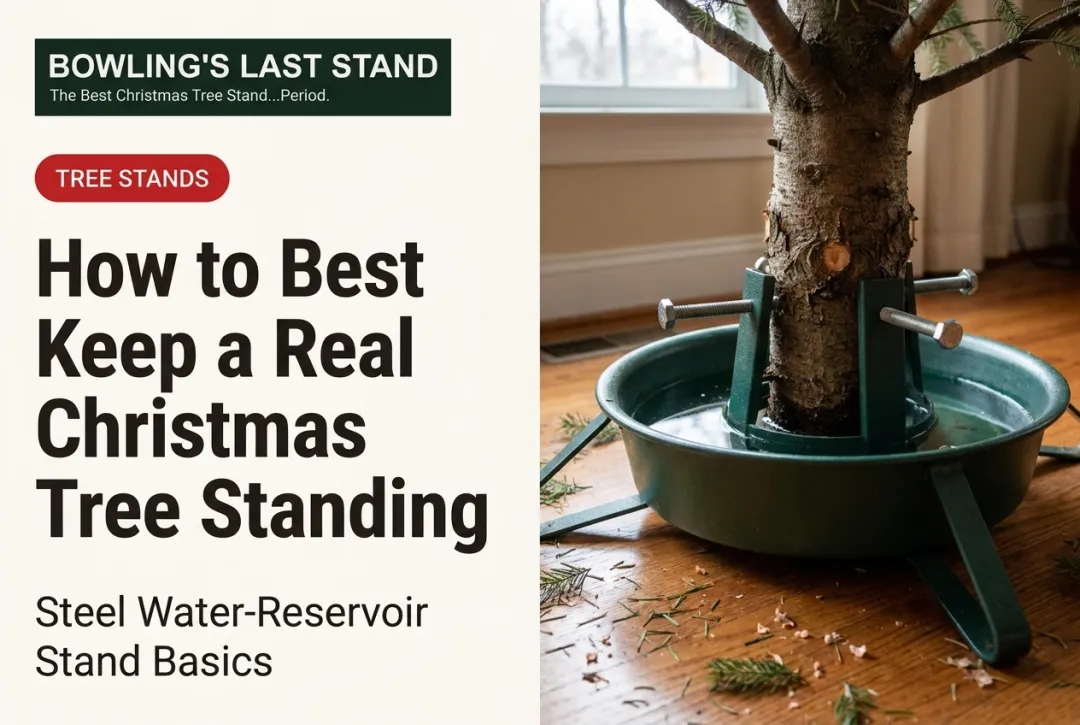
Bowling's Last Stand, a Michigan manufacturer that's built steel tree stands since 1989, offers a useful illustration of how capacity scales with tree size:
| Model | Tree Height Limit | Water Capacity | Stand Weight |
|---|---|---|---|
| 6XTS | Up to 7 ft | — | 15 lbs |
| 8XTS | Up to 9 ft | 1.2 gal | — |
| 10XTS | Up to 12 ft | 2.25 gal | 30 lbs |
| 12XTS | Up to 20 ft | 4 gal | 66 lbs |
| 16XTS | Up to 30 ft | 6.5 gal | 107 lbs |

These stands use a patented T-bolt design and a self-containing water reservoir. Larger models add a fourth leg and fourth T-handle for extra grip on heavier trunks.
A stand engineered for a 20- or 30-foot tree is not automatically a height riser. It's built to support the trunk at floor level. If you need the tree raised, you still need a separate, properly sized platform underneath. Don't assume a bigger stand solves a height problem it wasn't designed for.
Safe Ways to Raise a Christmas Tree
When you need elevation, use this hierarchy from best to worst.
Purpose-Built Platform
The safest option. Look for a level surface, a footprint at least as wide as the stand's base, a published load capacity, and non-slip contact points. Confirm it's compatible with your existing stand before buying.
Sturdy Wooden Box or Crate
This can work, but only under specific conditions:
- Solid construction (no hollow decorative crates)
- Footprint wider than the stand
- Perfectly level once placed
- Secured against sliding
- Rated or tested to hold the full combined weight
Skip anything marketed for lightweight storage — those aren't built for a wet, top-heavy load.
Custom Plywood Platform
A reasonable DIY route if you cover the basics:
- Internal bracing
- Proper fasteners (not just glue)
- Reinforced top surface
- Finished edges
- Floor protection underneath
For anything supporting an unusually tall or heavy tree, get a second opinion from someone who builds things for a living.
What to Avoid
- Stacked books: they shift and compress unevenly
- Loose bricks: no connection between layers, easy to kick loose
- Small furniture: rarely rated for concentrated point loads
- Bed risers: made for furniture legs, not a wet, heavy stand
None of these distribute weight evenly or resist sliding the way a built platform does.
Precautions for Real Trees
Keep the trunk clamped exactly as the stand instructs, keep the reservoir reachable, and prevent spilled water from reaching the platform or floor. The National Christmas Tree Association recommends a stand holding at least one quart of water per inch of trunk diameter — a rule that doesn't change once the stand is elevated, so plan your platform's cutout or access point accordingly.

When Not to Raise the Tree at All
- The tree already nears the ceiling.
- The stand is undersized for the tree.
- Any platform component rocks.
- Children or pets can reach the base.
- You can't secure it against accidental bumps.
If any of these apply, skip the riser. Use a shorter tree, a taller-capacity stand, or a different display setup instead.
Alternatives to a Physical Riser
Sometimes a few inches of visual height solves the problem without touching the base at all.
- A taller or vertically oriented topper draws the eye upward.
- Ribbon or garland wrapped in an upward spiral creates an illusion of extra height.
- Evenly spaced lights from top to bottom make the tree read as taller and fuller.
- Branch shaping (pulling branches up and out) opens visual space.
Tree collars and skirts fall in this same category. They dress up a low stand but aren't built to bear weight unless a product specifically says so.
Another option: choose a slimmer profile tree, or reposition it in the room (a corner placement often reads taller than a wall placement). Next season, the simplest fix may be picking a better-proportioned tree at the lot.
The trade-off: a physical riser adds real height but demands a structural check. Visual techniques are lower-risk but don't move the base at all.
How to Set Up and Inspect a Raised Christmas Tree
- Measure the full display height using the formula above, including any riser.
- Position and level the riser before placing the stand on it.
- Secure the stand to the riser so it can't shift.
- Place and center the tree, checking it's plumb from two different angles.
- Tighten the trunk support per the stand's instructions — Bowling's larger models, for instance, use four T-bolts and specifically warn "DO NOT USE THEM AS LEVERS" when tightening leg bolts.
- Fill the reservoir and confirm the cut end sits in water.
- Inspect the full assembly from all sides before decorating.

Test Before You Decorate
Gently push the tree from several directions. Check for rocking, leaning, or sliding at the riser-to-floor and stand-to-riser contact points. Tightening the stand harder will not fix an unstable platform underneath it. Fix the base first.
Anchoring Tall Trees
For large trees, wall or ceiling anchoring can help, but only with appropriate hardware and documented guidance — not improvised cord tied to a curtain rod. The CPSC's recommendation for guy-wires on large trees applies directly here.
Floor Protection
Use a waterproof barrier under real trees and non-slip pads that don't throw off the level. A dedicated mat (several stand manufacturers sell these) catches spills before they reach flooring or carpet.
Ongoing Maintenance
- Check water level daily for real trees.
- Re-inspect the riser and stand after moving gifts underneath or vacuuming nearby.
- Retighten only as the stand's instructions describe.
- Remove the setup immediately if any instability develops.
The NFPA's Christmas tree safety sheet recommends keeping trees at least 3 feet from any heat source and watering daily. Both checks matter even more once a tree is elevated and harder to monitor from across the room.
Conclusion
Choose a Christmas tree height riser for load capacity and stability, not height or looks. The right one supports the full combined load, keeps the trunk and water reservoir accessible, stays level, and holds the base stable under everyday bumps.
If you only need a small visual lift, a topper or lighting change solves it without any structural risk. For a large or tall tree, pair a wide, rated platform with a stand built for that tree's size. Bowling's Last Stand's 12XTS or 16XTS models handle trees up to 20 or 30 feet.
Measure first. Verify the product specs. Get the stand solution right before a single light goes on the tree.
Frequently Asked Questions
Can I put my Christmas tree on a riser?
Yes, if the riser is level, has a footprint at least as wide as the stand, carries a published load capacity, and stays compatible with your existing stand. Skip it if any of those conditions aren't met.
What is the safest way to raise a Christmas tree?
A purpose-built platform or a properly engineered box is safest. Avoid loose household objects like books or bricks, and always run a full stability check before decorating.
How high should a Christmas tree stand be?
It depends on ceiling clearance, topper size, tree weight, and your stand's limits — there's no universal number. Calculate total display height before choosing a riser.
Can I use a crate or box as a Christmas tree riser?
Only if it's structurally solid, wider than the stand's base, perfectly level, and secured against sliding. Decorative or hollow boxes aren't built for this kind of load.
Can I put a real Christmas tree on a platform?
Yes, as long as the platform safely supports the full setup and doesn't block access to the water reservoir. Elevation adds risk from water weight and a higher center of gravity, so check stability carefully.
How do I stop a raised Christmas tree from tipping over?
Use a broad, level base, center the trunk, and fully tighten the stand per instructions. Add anti-slip measures, anchor the tree where appropriate, and remove any setup that still rocks.