Introduction
A 6-foot Christmas tree looks simple to set up until you're on the floor, cursing a stand that's two sizes too small for the trunk. Many homeowners pick a base by height alone, then discover the trunk doesn't fit, the tree leans toward the window, or the water reservoir runs dry by day three.
The National Christmas Tree Association warns that a stand too large or too small for the trunk can let a tree tip over, and it advises against shaving down a trunk just to force a fit.
Get the base wrong, and you risk a wobbly tree, spilled water on your floors, or a stand that can't keep the tree upright through the season.
This guide covers the measurements that actually matter for a 6-foot tree: trunk diameter, stand footprint, ceiling clearance, water capacity, and floor space. Measure first, then shop.
Key Takeaways
- Measure trunk diameter and floor space — tree height alone won't tell you what stand you need
- Match the stand's height range, trunk opening, and reservoir size to your specific tree
- Reserve clearance for the stand, topper, branches, furniture, and foot traffic
- Pick a stand built for Christmas trees, not an improvised bucket or undersized support
What Is a Christmas Tree Base?
A Christmas tree base, or stand, is the structure at the bottom of the tree that holds the trunk upright. For real trees, it typically includes a water reservoir that keeps the trunk hydrated through the season.
"Base size" isn't one number. It can mean:
- External footprint — how much floor space the stand occupies
- Trunk opening — the maximum trunk diameter the stand can grip
- Reservoir capacity — how much water the stand holds for a live tree
Real-tree stands and artificial-tree bases work differently. A live tree needs a stand that clamps the trunk and holds water. An artificial tree usually locks onto a brand-specific center pole, so that "base size" is set by the manufacturer—not chosen the way a live-tree stand is.

Core Components of a Christmas Tree Base
Before you buy, look at five parts:
- Supporting frame and footprint — Wider, well-spread legs resist tipping; the footprint still has to fit the room without becoming a trip hazard.
- Trunk connection — The stand must fit your tree's actual trunk diameter. Forcing a large trunk into a small opening compromises the whole setup.
- Fastening mechanism — Screws, T-handles, or clamps that tighten evenly around the trunk keep the tree straight.
- Water reservoir — For live trees, it should be easy to fill, check, and clean without disturbing the decorated tree.
- Floor-contact points — How the legs meet the floor affects grip, especially on hardwood or tile.
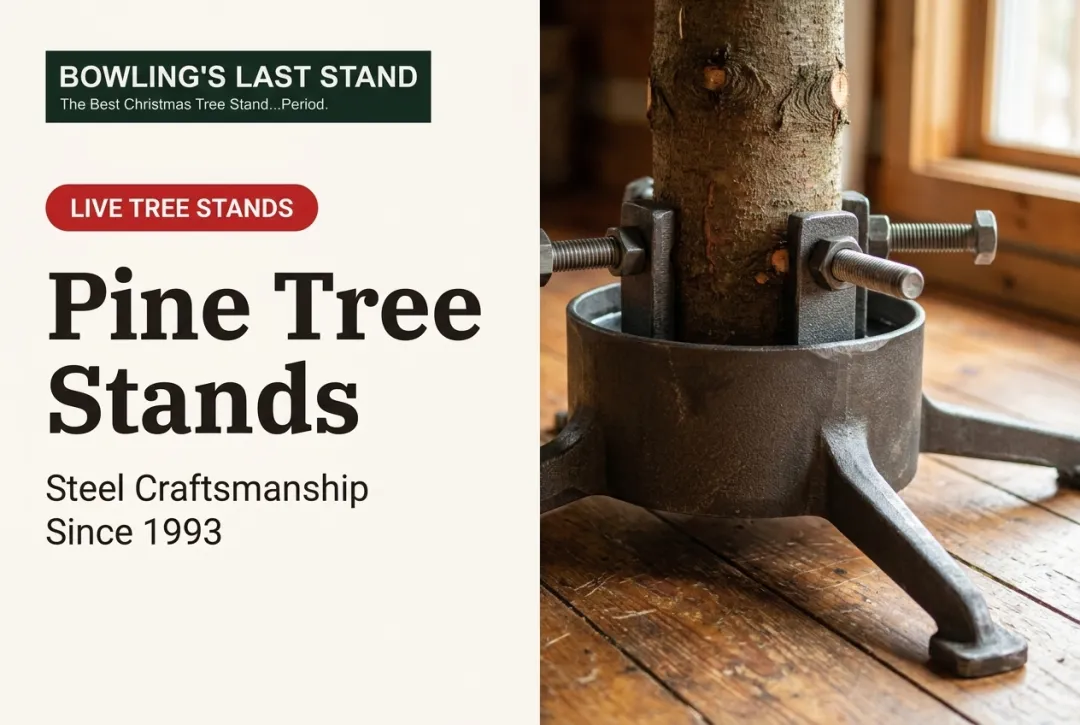
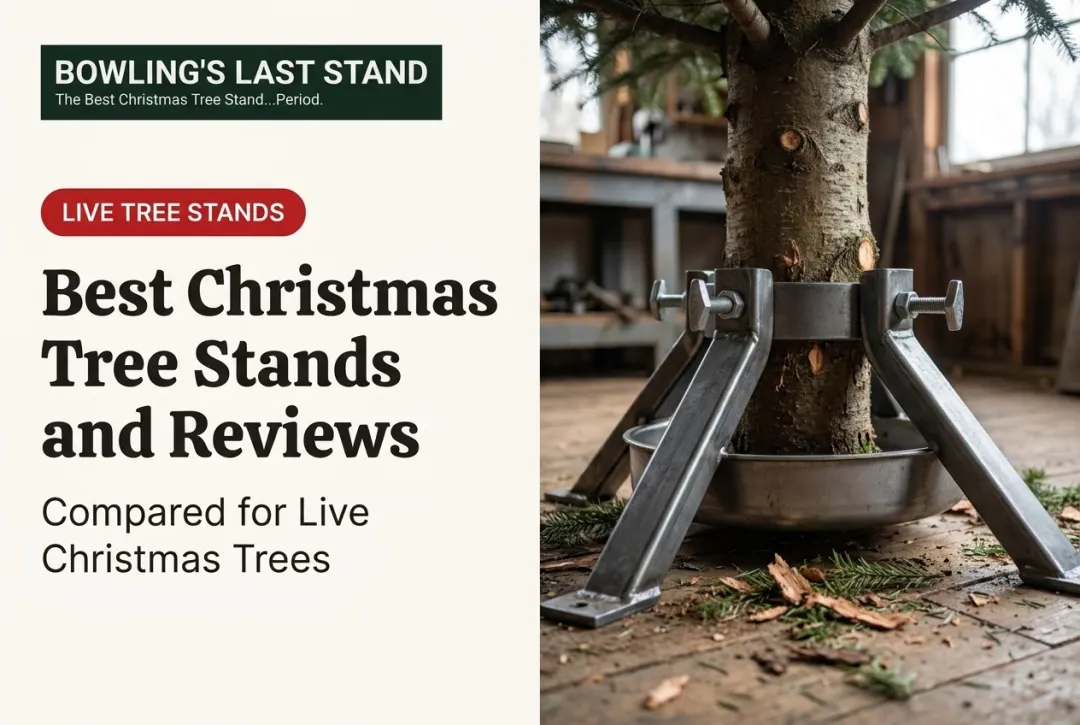
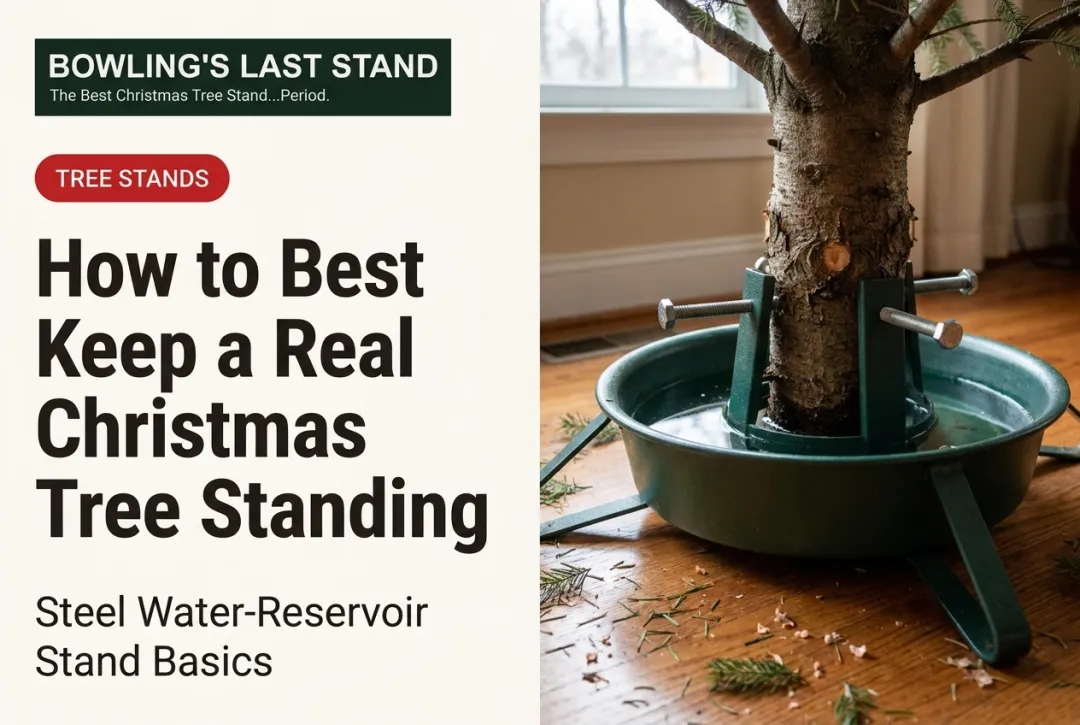
The Bowling's Last Stand 6XTS, built for trees up to 7 feet, uses a main bowl with three T-handles and a lag bolt instead of screws that bite into the trunk, so fastening is faster and more even.
Benefits of Choosing the Correct Base
Getting the base size right pays off well before the lights go on.
- A straighter, steadier tree. A properly fitted trunk connection keeps the tree centered, so you're not fighting a lean all season.
- Easier setup. When the trunk matches the stand's opening, you skip shaving bark or forcing branches into position.
- Lower risk of spills and tipping. A stand sized for your tree distributes the load evenly, reducing wobble and water spills on flooring.
- Protection for your space. Correct sizing keeps the tree from crowding furniture, outlets, or walkways.
- Long-term value. A stand used within its stated height and trunk range typically works again next year, and often for several Christmases after that.
One customer has used a Bowling's Last Stand model for over 15 years and says it's still holding up strong. When you match the stand to the tree's height and trunk size, a durable base is built to serve more than one season.
What to Consider When Choosing the Best Base for a 6-Foot Christmas Tree
"6 feet" describes height only — not trunk width, tree shape, or floor space. Two 6-foot trees from the same lot can differ by an inch or more at the trunk.
Before you shop, compare your tree's real measurements to the stand's stated height range, trunk capacity, and reservoir size. Don't assume — measure.
Tree Height and Ceiling Clearance
Measure from the floor to the ceiling at the exact spot where the tree will stand, not a different corner of the room. Ceilings aren't always level throughout a house.
A 6-foot tree needs more than 6 feet of clearance. Account for:
- The stand's height, which adds several inches before the trunk even starts
- The tree topper, which can add 6-12 inches depending on style
- Any gap you want between the topper and ceiling
A room with 7-foot ceilings can feel tight once you add a stand and topper to a 6-foot tree.
Trunk Diameter or Artificial Center Pole
For a real tree, measure the trunk diameter at the point where it will sit inside the stand, typically a few inches above the base. Only trim lower branches if the stand instructions call for it.
The National Christmas Tree Association is direct: a stand that's too large or too small for the trunk can let the tree tip. Sawing the trunk's sides to force a fit only makes the problem worse.
Bowling's Last Stand's instructions put it bluntly: "Don't sharpen the tree like a pencil and stuff it in the stand!"
If your tree is artificial, confirm the base matches the center pole's diameter and connector — and skip any stand features meant only for live trunks.
Bottom line: if the trunk doesn't fit the stand, size up — don't shave down.
Base Footprint and Tree Width
The stand needs to fit your floor space, but so does the tree itself. Measure the tree's widest point, or check the manufacturer's width specification, then mark that footprint on the floor before setup day.
Tree shape matters more than most shoppers expect:
- Full-profile trees spread wide at the base and need the most floor clearance
- Slim trees taper more sharply and fit narrower spaces
- Pencil trees take up the least floor area for a given height
For scale, a grower-industry resource hosted by Michigan State University notes that a 6-foot tree sheared to roughly two-thirds taper measures about 4 feet wide at its base.
Treat that as a reference point, not a guarantee — always check the actual tree or listing. Leave extra room for furniture, walkways, outlets, and ornaments that extend past the branches.
Stability, Flooring, and Placement
Floor space is only half the placement decision — the surface under the stand has to stay level and firm. Even a well-built base can wobble on uneven flooring or thick carpet that compresses under the legs.
Before you commit to a spot, check for:
- High-traffic walkways where people might bump the tree
- Uneven flooring or thresholds near the base
- Proximity to fireplaces, radiators, or heat vents
- Doors that swing near the tree
- Areas where pets or kids may pull on low branches
The National Fire Protection Association recommends keeping trees at least three feet from heat sources like fireplaces, radiators, and heat vents, and keeping exits clear.
Decorating weight matters too. Spread heavier ornaments evenly so one side doesn't pull the tree off-center once it's secured.
Water Reservoir and Real-Tree Care
Live trees drink. Industry guidance suggests a cut tree can use up to a quart of water per day for each inch of stem diameter, and the reservoir should hold at least that same ratio.
A 4-inch trunk, for example, may need roughly a gallon or more. Bowling's Last Stand's 6XTS, built for trees up to 7 feet, holds 2 quarts; the 8XTS and larger models scale up for bigger trunks and taller trees.

Before you buy, confirm:
- You can fill and check the reservoir without moving a fully decorated tree
- The stand won't spill when the tree is adjusted or bumped
- Capacity matches your watering routine, not just day one
Artificial trees skip this step. There's no reason to pay extra for a reservoir you will never use.
Construction, Fastening, and Intended Load
Materials alone don't guarantee stability. In HGTV testing, a heavy cast-iron stand with only three points of trunk contact still let the trunk slip. Grip design and even contact matter more than mass.
When comparing stands, check:
- Material — Steel resists cracking and warping better than thin plastic
- Published specs — Height range, trunk-size range, and tree type should match your tree
- Warranty and parts — Replacement parts (like T-bolts) available if a component wears out
Watch for warning signs after setup:
- Wobbling after fasteners are fully tightened
- Cracks or bends in the frame
- Stripped fasteners that won't hold
- Uneven grip around the trunk
Bowling's Last Stand builds its stands from steel and sells replacement T-bolts individually, so a worn fastener doesn't mean replacing the whole stand.
How Bowling's Last Stand Can Help
Bowling's Last Stand has manufactured steel Christmas tree stands in Bear Lake, Michigan, since December 1989. Floyd Bowling Jr. and Floyd Bowling Sr. built the original prototype from materials on hand, patented the design soon after, and the company has stayed family-owned ever since.
The patented design centers on two features:
- A self-containing water reservoir built into the stand itself
- A T-bolt fastening system, designed to be easier to turn than traditional stand screws
For a 6-foot tree, the 6XTS model supports trees up to 7 feet. Specs that matter for base fit:
- Three T-handles plus a lag bolt for fastening
- 2-quart built-in water reservoir
- 15-pound steel stand
- Setup: drill a 1/2-inch hole about 2 inches deep into the trunk center for the lag bolt
"Up to 7 feet" is a capacity range, not a guarantee of fit for every 6-foot tree. Trunk diameter still varies between trees of the same height, so compare your measurements against the 6XTS specifications, or contact the company, before buying.

Bowling's Last Stand's full lineup covers trees from 7 to 30 feet, from living-room trees to large commercial displays. Every stand is made in the USA.
The company still operates as a family business out of Bear Lake, Michigan. That same approach earned a mention in a 1992 Wall Street Journal article and a number-one rating from The Courier Journal in a comparison of eight tree stands.
Conclusion
The right base for a 6-foot Christmas tree matches your tree's trunk or center pole, floor footprint, room clearance, stability needs, and—for live trees—water capacity.
Measure before you shop:
- Ceiling height at the exact tree location
- Trunk diameter or center pole size
- Floor footprint and tree width
- Available clearance from furniture, traffic, and heat sources
- Water needs, if you're using a live tree
Then compare those numbers against the stand manufacturer's published specifications, not a general assumption about what "6 feet" requires.
A correctly matched, level, durable base won't fix every holiday headache. It does make setup faster and keeps the tree stable through the season. That's one less thing to worry about while you're hanging ornaments.
Frequently Asked Questions
What can I use for a Christmas tree base?
A purpose-built Christmas tree stand is the safest option. Live trees need a trunk clamp and water reservoir; improvised containers rarely hold weight evenly or hold water without leaking.
What are the dimensions of a Christmas tree stand?
Dimensions vary by model and usually include the external footprint, trunk opening, stand height, and reservoir size. Check the manufacturer's specs for the exact model you're considering.
What are the dimensions of a 6ft Christmas tree?
A 6-foot height doesn't set one standard width or trunk diameter. Trees vary by species and shaping, so check the listed width, measure the trunk, and leave extra clearance for the stand and decorations.
What size tree skirt fits a 6ft tree?
The right skirt diameter depends on your stand's footprint and the spread of the tree's lowest branches, not the tree's height. Measure the base area after accounting for nearby furniture, then choose a skirt that fully covers the stand.