Introduction
You just picked out the perfect fresh tree at a Dallas farm or lot. Then it hits you: does this place even sell stands?
It's a common snag. Many shoppers assume a Christmas tree seller automatically carries the stand too, only to find out at checkout that it's not included.
The short answer: it depends on where you shop. Some Dallas-area farms and lots sell stands outright, others build a custom wood stand on the spot, and a few expect you to bring your own.
This guide covers where to check locally, what questions to ask before you drive out, and how to pick a stand that actually matches your tree's height and trunk size.
Key Takeaways
- Confirm stand availability before you visit; many Dallas farms sell the tree only
- Expect one of three setups: stand included, stand sold separately, or your stand installed on-site
- Match any stand you buy to tree height, trunk capacity, and water reservoir size
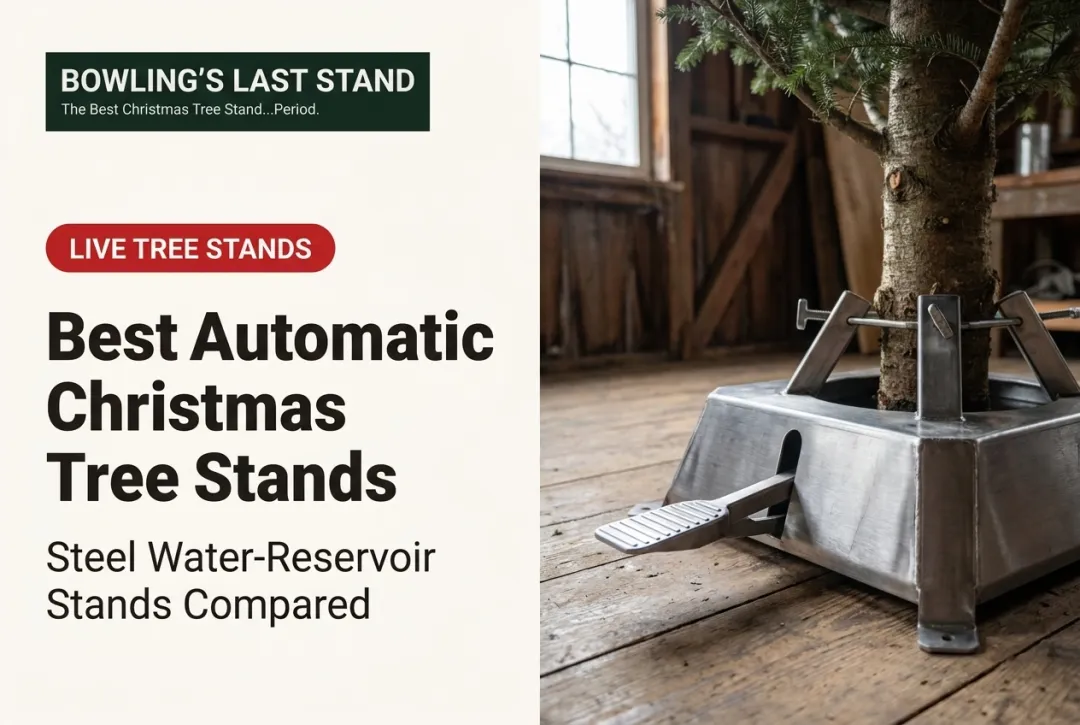
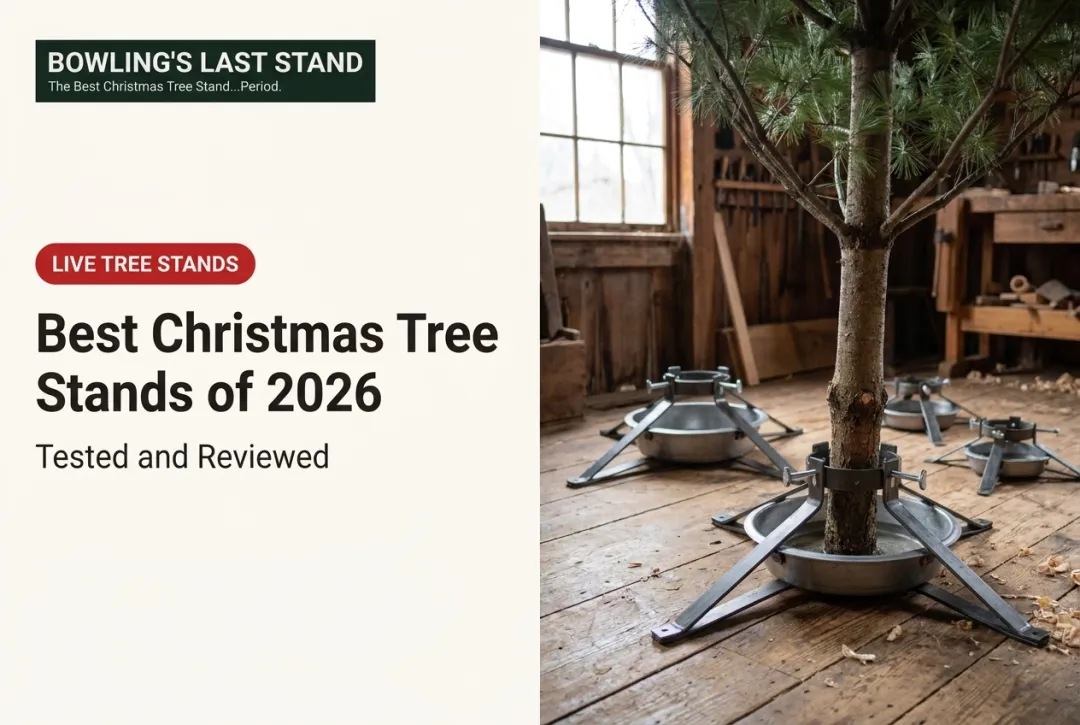
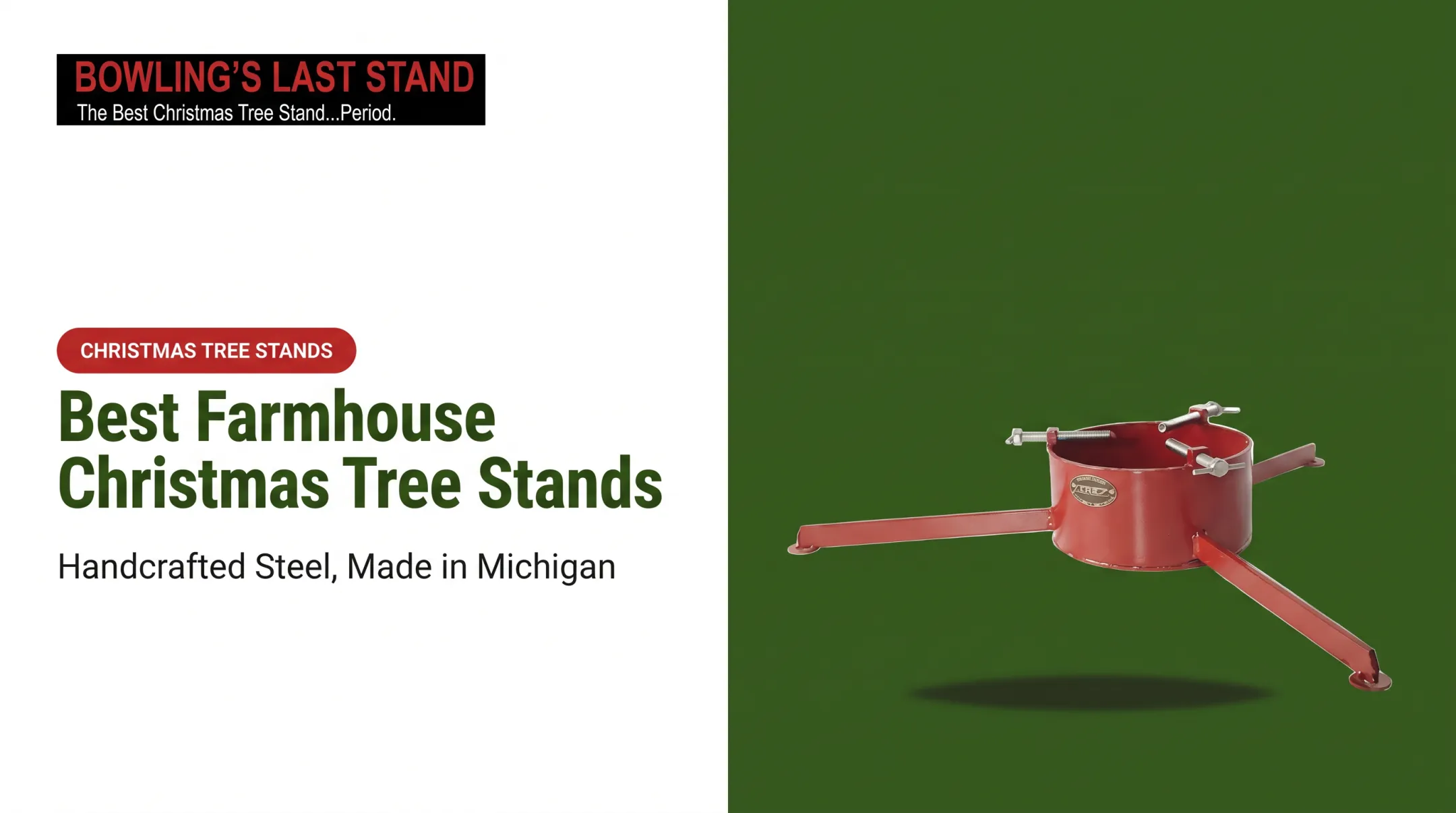
- Keep a reusable steel stand such as Bowling's Last Stand ready if farm options don't fit
Do Christmas Tree Farms Sell Stands in Dallas?
Selling trees and selling stands are two different businesses, even when they happen at the same lot. A farm can have acres of beautiful Fraser firs and still have zero take-home stands in stock. Here's what actually happens across the Dallas area:
- Included in a package: some sellers bundle a stand with delivery and setup
- Sold as an add-on: you pick a stand separately, often at checkout
- Available only for certain sizes: smaller trees get stock stands, oversized ones may not
- Not offered at all: you're expected to bring your own
What Dallas-Area Policies Actually Look Like
Patton Christmas Trees at 11000 Garland Rd. in Dallas sells stands directly, and it will also fit a customer's own stand at no extra charge. A few miles away, Patton's Christmas Trees on Mockingbird Lane takes a different approach entirely. It builds a custom wood stand with a water bowl sized to whatever tree you buy. Same last name, different businesses, different policies. Other farms in the broader area, including Yesterland Farm in Canton and Elves Christmas Tree Farm in Denison, publish plenty of detail about their trees but don't list a take-home stand policy anywhere on their sites. That doesn't mean they skip it. It just means you need to ask. Why policies shift mid-season:
- Seasonal stock runs out faster for larger stands than for the trees themselves
- A farm's field operation and its retail lot sometimes operate under separate inventory systems
- Demand for stands fitting 8-foot-plus trees tends to outpace supply by mid-December Before you drive anywhere, check the farm's website, call, or send a quick message through social media. If a business doesn't publicly confirm stand availability, treat that as a gap to fill with a phone call, not an assumption. Before you drive anywhere, check the farm's website, call, or send a quick message through social media. If a business doesn't publicly confirm stand availability, treat that as a gap to fill with a phone call, not an assumption. When a lot doesn't stock stands—or runs out mid-season—bring your own or order one before you go.

Where Can You Buy a Christmas Tree Stand in Dallas?
If your chosen farm doesn't sell stands, you've got several other local routes.
| Option | What to expect |
|---|---|
| Garden centers | Calloway's Nursery bundles a water stand with its fresh-cut trees, including the Tipped Noble Fir |
| Home-improvement retailers | Home Depot and Lowe's stock live-tree stands throughout the holiday season |
| Seasonal tree lots | Vary widely; some build custom stands, others sell them separately |
| Specialty manufacturers | Ship reusable steel stands directly to your door |
What to Compare Before You Buy
Not every stand fits every tree. Before committing, check:
- Single-season vs. reusable — plastic stands are often one season; steel ones last for years
- Trunk diameter range — a stand rated for a 4-inch trunk won't hold an 8-inch one
- Water capacity — bigger trees drink more, especially in the first week
- Price and delivery — some sellers charge separately for setup or drilling
- Pickup vs. shipping — matters if you're buying online rather than locally
Call Before You Drive
Seasonal listings love showing off their trees. Stand inventory? Not always mentioned. A two-minute call saves a wasted trip:
"Do you sell stands separately, include one with the tree, or install a stand I bring myself?"
That single question clears up most confusion fast.
When Local Options Fall Short
If nearby farms and retailers don't have a stand big enough for your tree, buying online fills the gap.
Bowling's Last Stand, a Michigan-based manufacturer, builds patented steel stands with water reservoirs for trees from 7 to 30 feet. It ships to customers across Texas and 27 other states, and its stands also appear at select Texas retailers, including Moomey Christmas Trees in Dallas and Plano.
Before ordering any stand online, confirm current models, tree-size guidance, and shipping timelines directly with the seller. Return policies and product dimensions differ by retailer.
What to Ask Before Buying a Stand From a Tree Farm
A few direct questions before you pay can save a frustrating setup day later.
Pricing and fees:
- Is the stand included in the tree's advertised price, or billed separately?
- Does installation, drilling, or delivery carry an extra charge?
Fit and function:
- What's the maximum trunk diameter and tree height this stand supports?
- Does it have a water reservoir, and how large is it?
- What happens if the stand doesn't fit my trunk once it's freshly cut?
Logistics:
- What payment methods do you accept?
- What's your return or exchange policy if the stand doesn't work out?
- Can I reserve a stand along with my tree, or is it first-come, first-served?
A farm that answers these clearly, without hedging, is one you can trust to follow through. If staff seem unsure about trunk sizing or water capacity, that's a sign to double-check before your tree is already cut and waiting in your trunk.
How to Choose the Right Stand for Your Dallas Christmas Tree
Picking a stand by looks or price alone is how trees end up leaning by Christmas Eve. Match the stand to your tree's actual dimensions instead.
Match Capacity to Your Tree
Here's a quick reference based on common stand capacities:
| Tree height | Typical trunk diameter | Reservoir size needed |
|---|---|---|
| Up to 7 ft | 3-5 inches | 1-1.5 gallons |
| Up to 9-12 ft | 5-8 inches | 2-4 gallons |
| Up to 20-30 ft | 8-10+ inches | 4-6.5 gallons |

Basic stands work fine for standard residential trees. Heavy-duty steel models become necessary for tall, wide, or commercial display trees, where weight and branch spread put real strain on the base. Always check the manufacturer's specific capacity rating rather than guessing from the tree's height alone.
Why Stability Isn't Optional
A wide base matters more than most shoppers expect. Four legs spanning several feet distribute weight far better than a narrow tripod design, reducing the risk of a lean or tip. No stand is tip-proof, but a properly tightened trunk support gets you most of the way there.
Water Reservoir Basics
Fresh trees drink more water than people expect, especially in the first few days after cutting. Dallas homes running heat or A/C dry the air further, so usable reservoir capacity matters even more.
The National Christmas Tree Association recommends at least 1 quart of water per inch of trunk diameter, with that volume available after the trunk itself displaces water in the reservoir (National Christmas Tree Association). A 4-inch trunk needs roughly a gallon of usable capacity, not just a gallon-rated stand.
Purdue Extension's guidance on real tree buying points to the same three priorities: stability, sufficient water capacity, and ease of setup (Purdue Extension). Those priorities hold whether you're setting up a 6-foot tabletop tree or a 20-foot commercial display.
Setup Checklist
- Make a fresh, straight cut across the trunk base (angled cuts dehydrate faster)
- Place the stand on a level, solid surface
- Secure the trunk according to the manufacturer's instructions
- Fill the reservoir and check water levels daily
- Test stability before adding ornaments or lights
- Keep the tree away from heaters, vents, and direct sunlight
For Commercial or Very Tall Trees
If you're setting up a tree taller than 12 feet for a business lobby or event space, don't rely on residential stands. Choose a steel model rated for that height, such as a Bowling's Last Stand unit built for 20- or 30-foot trees. Confirm indoor clearance and floor protection ahead of time, and check whether assembly tools are included before installation day.
Frequently Asked Questions
How much do Christmas tree stands cost?
Prices vary by material, size, and water capacity. Basic plastic stands often run $30–$40, steel models $50–$70, and premium or large-tree stands $100+—check current Dallas-area and online listings for exact pricing.
Do Christmas tree farms sell stands?
Some do, while others include a stand in a setup package or expect you to bring your own. Policies differ even between nearby locations, so confirm with the specific farm before visiting.
Where can I buy Christmas tree stands?
Dallas-area farms, tree lots, garden centers, and home-improvement retailers all carry stands. Specialty makers such as Bowling's Last Stand also sell steel stands direct online when local stock runs short.
Are Christmas tree stands included with the tree?
It depends entirely on the seller. Check whether the advertised tree price covers just the tree, or also includes a stand, delivery, and setup.
What size Christmas tree stand do I need?
Match the stand to your tree’s height, trunk diameter, and weight per the manufacturer’s rating. Taller or heavier trees need a wider base and a larger water reservoir.
Can a Christmas tree farm install a stand for me?
Some farms and delivery services offer installation as part of the purchase, while others only sell the tree itself. Confirm stand compatibility and any setup fees before you buy.