Automatic Christmas tree stands promise to fix this. Foot pedals replace crouching. Ratcheting jaws replace guesswork. Some models even signal when the trunk is locked tight.
This guide covers automatic clamping and setup stands only, not automatic watering pumps or motorized rotating platforms for artificial trees. We'll compare mechanisms, tree-size limits, water capacity, and stability using verified manufacturer specifications. Confirm current pricing and specs directly with the seller before you buy; listings change by season and retailer.
Key Takeaways
- Automatic stands cut manual tightening; height and trunk limits still vary widely by model.
- Size the stand to tree height, trunk diameter, weight, and live vs. artificial use.
- Rank stability and water capacity above hands-free pedal convenience.
- Rotating artificial-tree stands are a separate category, not a live-tree substitute.
Overview of Automatic Christmas Tree Stands in the US Market
"Automatic" gets used loosely in this category, so here's what actually separates the mechanisms:
- Foot-pedal clamping: Pumping a pedal draws multiple jaws against the trunk simultaneously, no bolts required.
- Ratcheting: Incremental tightening that holds its position without a full manual turn.
- Quick-lock: Push-pull bolts or a release button that speeds up positioning, though you still touch every bolt.
- Self-tightening: A claim only valid when a manufacturer explicitly describes that behavior, not just any pedal.
These are distinct from automatic watering stands (which pump water on a schedule) and motorized rotating stands (which spin artificial trees via an electrical outlet). Mixing up the three is the single most common buying mistake in this category.
Why This Matters for US Buyers
A solo installer benefits most from true foot-pedal clamping. A crew setting a 15-foot tree in a church or retail lobby cares more about base footprint and water capacity than pedal convenience.
The National Christmas Tree Association estimates 25-30 million real trees are sold annually in the US, and a large share of those buyers still wrestle with conventional bolt-and-screw stands every year.
That volume is why fit matters before brand. A stand built for a 6-foot artificial tree on a pole won't help you with a freshly cut 12-foot spruce. Use case, not brand recognition, should drive the decision.

Top Automatic Christmas Tree Stands
We evaluated each product by mechanism type, tree-size compatibility, stability, water management, and verified customer feedback. Manufacturer claims were checked against specification pages and independent testing where available.
Krinner Tree Genie XXL Deluxe
This is the clearest example of true foot-pedal clamping. The user centers the trunk, then pumps a pedal; a single cable draws five claws against the wood simultaneously. A bell signals secure contact, and the pedal lock engages on its own.
Verified specifications:
| Spec | Detail |
|---|---|
| Max tree height | 12 ft |
| Max trunk diameter | 7 in |
| Base diameter | 20 in |
| Stand weight | 18 lb |
| Water capacity | 2.5 gal |
| Price | $139 (manufacturer) |
The water gauge tracks water level, not clamp tightness, so don't confuse the two readouts. Return policy from the US seller allows replacement or refund within 30 days of a damaged or defective item; treat that as a return window, not a multi-year warranty claim.
Limitation: At 18 pounds, one person can manage setup for most residential trees, but a top-heavy 12-footer still benefits from a second set of hands during the initial lift.
Cinco Express C-152E
The C-152E is a quick-lock stand, not a full automatic clamp. Cinco's push-pull ratchet lets you slide bolts into position and press a release button, which is faster than threading conventional bolts through their entire travel, but you're still positioning each bolt by hand.
Verified specifications:
| Spec | Detail |
|---|---|
| Max tree height | 8 ft |
| Max trunk diameter | 6 in |
| Footprint | 16 x 16 in |
| Water capacity | 1.3 gal |
| Stand weight | 3.25 lb |
| Retail price | ~$35 |
Don't confuse this with the Cinco C-152 Classic, which uses a captive nut and conventional bolts with no quick-lock feature at all. The C-152E suits buyers prioritizing low cost and speed on a smaller tree, not stability for a large or heavy specimen.
Dyno XTS3: A Pedal That Doesn't Clamp
The Dyno XTS3 is easy to misread as automatic. In practice the sequence is:
- Tighten three threaded bolts into the trunk by hand
- Set that assembly into the base
- Use the pedal only to swivel and straighten the tree—it does not grip the wood
The manufacturer's manual warns against pressing the pedal without holding the trunk steady, since the tree can fall. That's pedal-assisted leveling, not automatic clamping, so it's excluded from this shortlist. It remains a reasonable bolt-tightening stand if you find current stock.
Best for Tall or Heavy Real Trees
Krinner's Genie Steel is rated for 15-ft trees with an 8-in trunk, a 30-in base, and 13-lb stand weight. It's the tallest maker-rated automatic clamp we found, priced around $290.
Here's the catch: its reservoir holds only 0.5 gallons. The Real Christmas Tree Board recommends roughly one quart of water capacity per inch of trunk diameter, accounting for water the trunk itself displaces.
At an 8-inch trunk, that guideline implies closer to 2 gallons before displacement—nearly four times what the Genie Steel holds. The stand can still support the tree structurally; you'll just refill far more often than a height rating alone suggests.

For buyers who want maximum structural capacity over automatic operation:
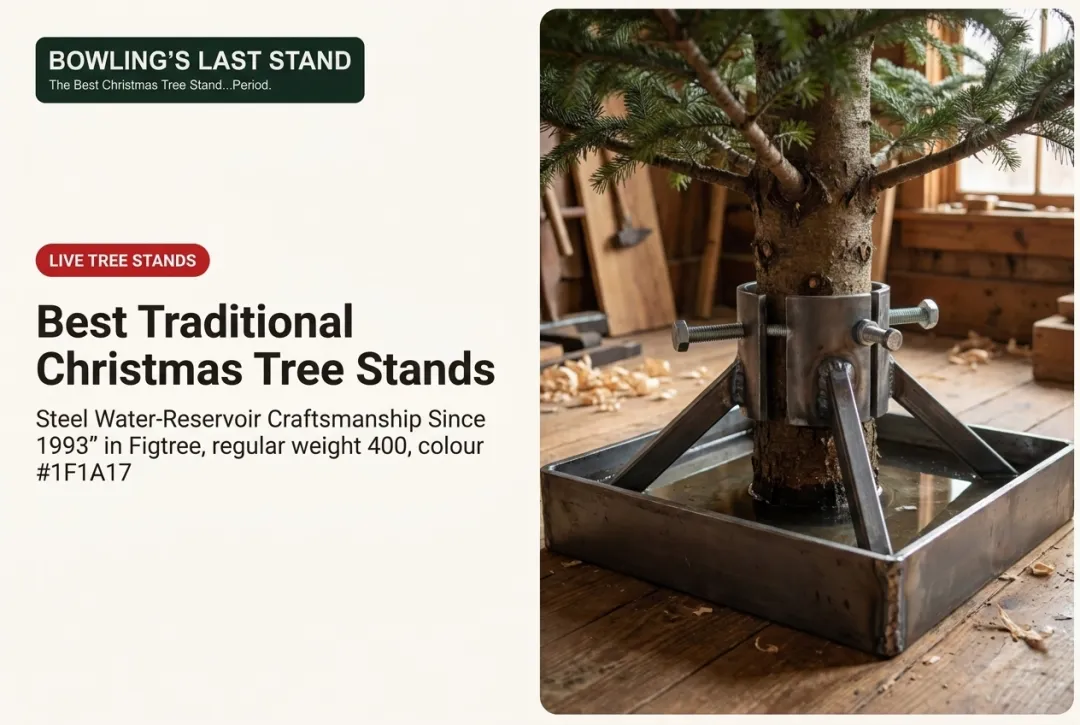
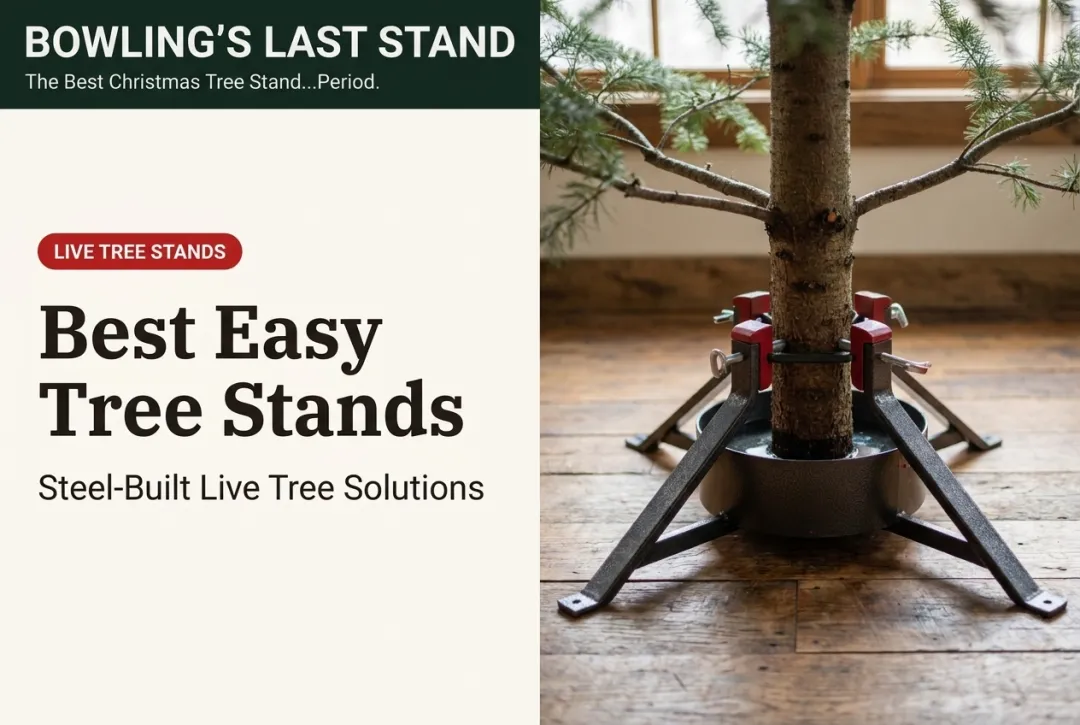
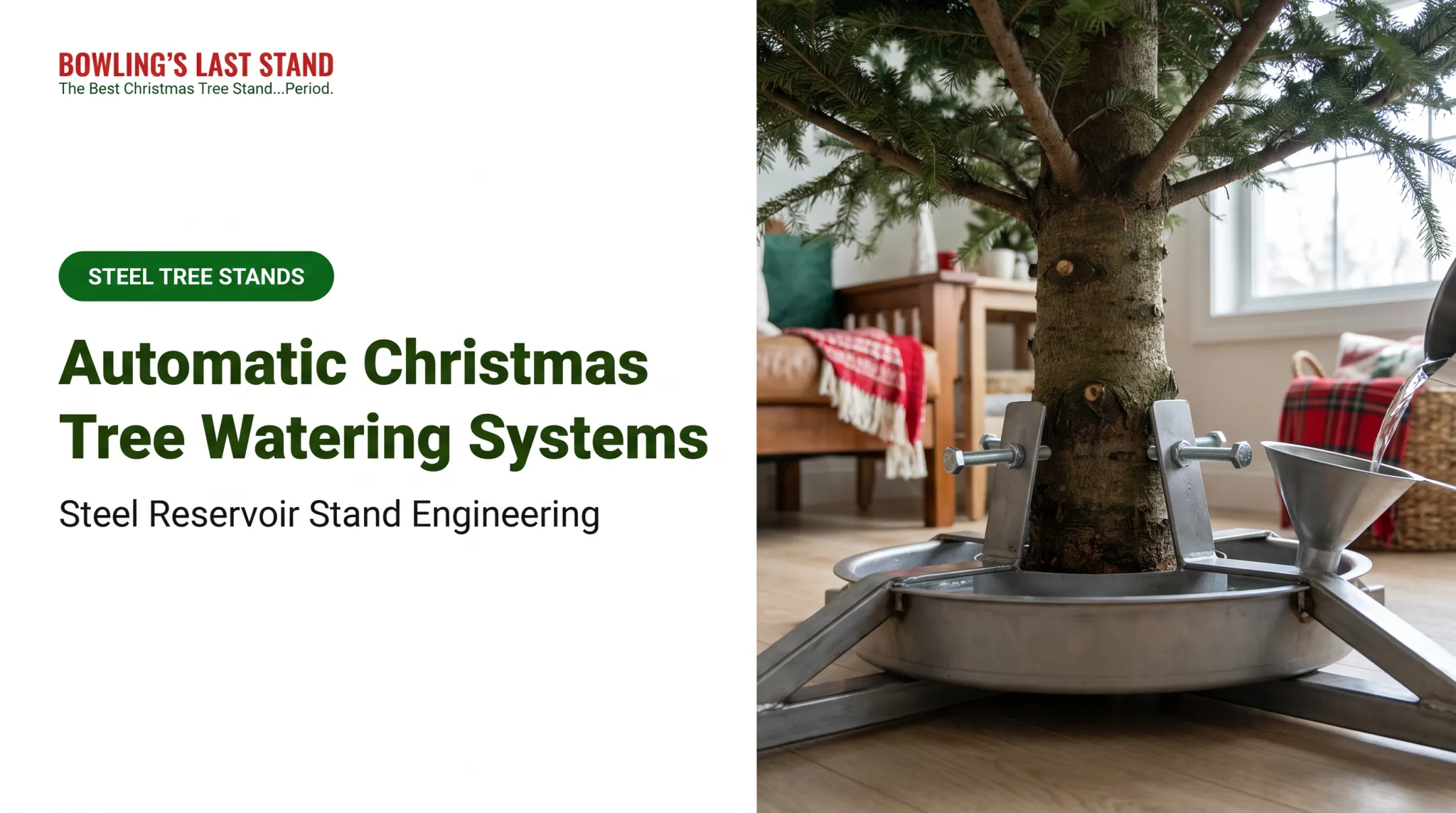
Bowling's Last Stand manufactures steel stands in Bear Lake, Michigan, built specifically for this problem. Their lineup uses T-handles and clamping bolts rather than a foot pedal, but the size range runs considerably further:
| Model | Max tree height | Water capacity | Stand weight |
|---|---|---|---|
| 8XTS | 9 ft | 1.2 gal | 20 lb |
| 10XTS | 12 ft | 2.25 gal | 30 lb |
| 12XTS | 20 ft | 4 gal | 66 lb |
| 16XTS | 30 ft | 6.5 gal | 107 lb |
One owner reported using a Bowling's stand for trees up to 17 feet across roughly three years, adjusting four clamps to get the trunk exactly straight.
That's manual work, not automatic. Water capacity and stand weight still scale with tree size in a way few pedal stands attempt past 12 feet, and for a tall or commercial display that structural headroom often matters more than pedal convenience.
Best for Artificial Trees or Rotating Displays
Rotating stands belong to a separate category entirely. The TreeTime rotating tree stand explicitly states it must not hold a real tree. It accepts artificial poles up to 1.25 inches in diameter, supports up to 100 pounds, and runs on a 120V outlet for continuous rotation.
A similar CMI rotating stand sold through Lowe's covers trees up to 6 feet and 80 pounds, again built for artificial-tree poles, not live wooden trunks requiring water.
Quick rule: if a stand has no water reservoir and specifies pole diameter instead of trunk diameter, it's an artificial-tree product. Using it for a live tree risks both instability and a trunk that dries out within days.
Bowling's Last Stand is a manual T-bolt design, not a foot-pedal or rotating mechanism, so it sits outside the automatic ranking and is cited above only as a US-made steel option when durability and tree-size range matter more than pedal convenience.
How We Chose the Best Automatic Christmas Tree Stands
Our process leaned on manufacturer specification pages, published instructions, and independent testing rather than marketing copy alone.
What we checked for each stand:
- Mechanism verification - Does the pedal actually clamp the trunk, or just adjust tilt after bolts are already tightened?
- Fit and stability - Maximum tree height, trunk diameter, base footprint, and whether a fresh straight-cut trunk is required.
- Water management - Reservoir size relative to trunk diameter, and ease of checking or refilling.
- Ownership factors - Storage footprint, corrosion resistance, replacement parts, and warranty terms.
Independent reviews helped pressure-test those same checks in practice.
Wirecutter's testing evaluated stands by filling reservoirs, checking for spills, and pulling mounted trees with a force gauge. Their Krinner and Cinco picks both maxed out the gauge's 50-newton limit, meaning both resisted tipping well.
Wirecutter also noted that quick-release bolts still require reaching underneath the tree, something true pedal-clamping avoids entirely. Measured stability and ease of installation are two separate things, so don't conflate them.

Common mistakes we watched for:
- Choosing by tree height alone while ignoring trunk diameter
- Assuming any automatic stand works with artificial trees
- Overlooking water capacity relative to trunk size
- Exceeding manufacturer-stated limits for "just one more foot"
- Treating a rotating stand as a stability upgrade
Conclusion
The right automatic Christmas tree stand depends on your tree's height, trunk diameter, water needs, and how much assistance you want during setup. Start with the mechanism and published limits, not the price tag or packaging claims.
- Need hands-free clamping for a 10-to-12-foot live tree? Krinner's Tree Genie XXL Deluxe is the clearest verified option.
- Want a budget quick-lock for a smaller tree? The Cinco C-152E works, though you still position bolts by hand.
- Displaying a tall or heavy tree where capacity matters more than pedal convenience? Confirm height, trunk fit, and water needs against Bowling's Last Stand steel model specs before ordering.
No stand fixes a poorly cut trunk or an overloaded reservoir. Match the mechanism to the job, and the rest of the season gets easier.
Frequently Asked Questions
What is an automatic Christmas tree stand?
An automatic Christmas tree stand uses a foot pedal, ratcheting jaws, or a quick-lock system to secure the trunk with less manual bolt turning. This is distinct from automatic watering systems or motorized rotating stands.
Are automatic Christmas tree stands worth it?
For solo installers or anyone with back or mobility concerns, yes. For smaller trees or those comfortable with traditional bolts, a conventional stand may be sufficient and cheaper.
What size Christmas tree stand do I need?
Check your tree's height, trunk diameter, and weight against the manufacturer's published limits. Height alone is not a reliable sizing method, especially for trunks over 6 inches.
Can an automatic stand be used with a real Christmas tree?
Many automatic stands are built specifically for live trees, but verify trunk diameter compatibility, fresh-cut requirements, and water reservoir size before buying.
How do you keep a Christmas tree straight in an automatic stand?
Make a straight, level cut on the trunk, center it in the stand, then engage the locking mechanism fully. Check the tree from at least two angles before releasing the pedal or tightening further.
Are rotating Christmas tree stands the same as automatic tree stands?
No. Rotating stands spin artificial-tree poles using an electric motor. Automatic live-tree stands focus on gripping and leveling a wooden trunk, typically with a water reservoir, which rotating stands lack.