Introduction
Your cat sees the Christmas tree differently than you do. To her, it's a climbing structure, a hiding spot, and a swaying toy all in one. Add a dog that likes to investigate low branches, and a wobbly stand becomes a genuine safety problem.
Cornell's Feline Health Center notes that an unanchored tree can fall when a climbing cat tests it. That risk starts with the stand, but it doesn't end there.
A truly pet-proof setup needs several layers:
- A stand sized correctly for your tree
- Placement away from furniture a cat could launch from
- Physical anchoring
- Pet-safe decorations
- Protected cords
This guide compares Christmas tree stands commonly used in pet-owning households. It shows how to match a stand to your tree's height, trunk diameter, and water needs.
Key Takeaways
- A stable, correctly sized stand reduces tipping risk but doesn't replace anchoring and supervision.
- Compare stands by tree height, trunk diameter, base footprint, construction, and water capacity.
- Bowling's Last Stand makes patented steel stands in the USA for trees from 7 to 30 feet.
- Keep cats away from tree water, cords, tinsel, and breakable ornaments.
- Offer cats a safe outlet, such as a cat tree or a separate gated area.
Overview of Cat- and Pet-Proof Christmas Tree Stands in the U.S. Market
A cat- and pet-proof Christmas tree stand is a stable, appropriately sized base that helps keep a tree upright when pets investigate it. "Pet-proof" describes a safety-oriented setup, not a guarantee. No stand can promise a determined climber won't eventually win.
Cats create unique stability challenges that dogs typically don't:
- Climbing directly into the branches, shifting weight unevenly
- Jumping from nearby furniture onto the tree itself
- Batting at low-hanging ornaments or branches
- Hiding underneath, then bolting suddenly and catching a branch on the way out
Each of these can shift a tree's center of gravity in ways a stand by itself can't fully counteract.
In the U.S. market, stands generally differ by build and how they grip the trunk:
- Plastic basin stands with manual bolts and a built-in water reservoir
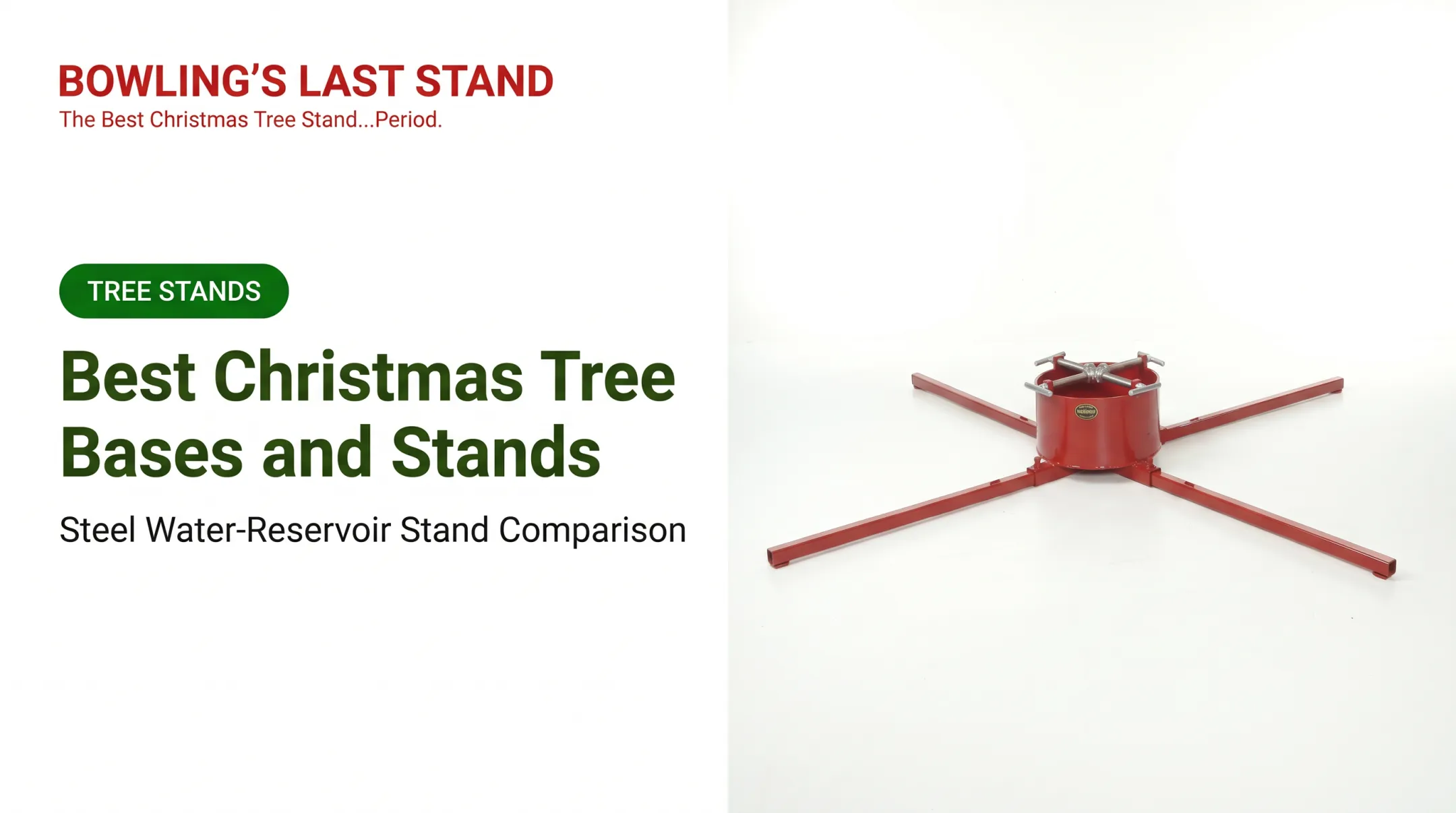
- Cast or welded steel stands, often heavier and built for larger trees
- Manual-bolt designs, the traditional screw-and-tighten approach used on many plastic and steel models
- Quick-clamp or pedal stands, designed for faster one-person setup

The options below are compared using manufacturer specifications and practical pet-safety considerations, not brand recognition. Always verify current specs before you buy, since manufacturers occasionally update models.
Top Cat and Pet-Proof Christmas Tree Stands
Each stand below is evaluated on stability, material strength, supported tree size, trunk fit, water containment, and how easily it pairs with additional anchoring.
Bowling's Last Stand
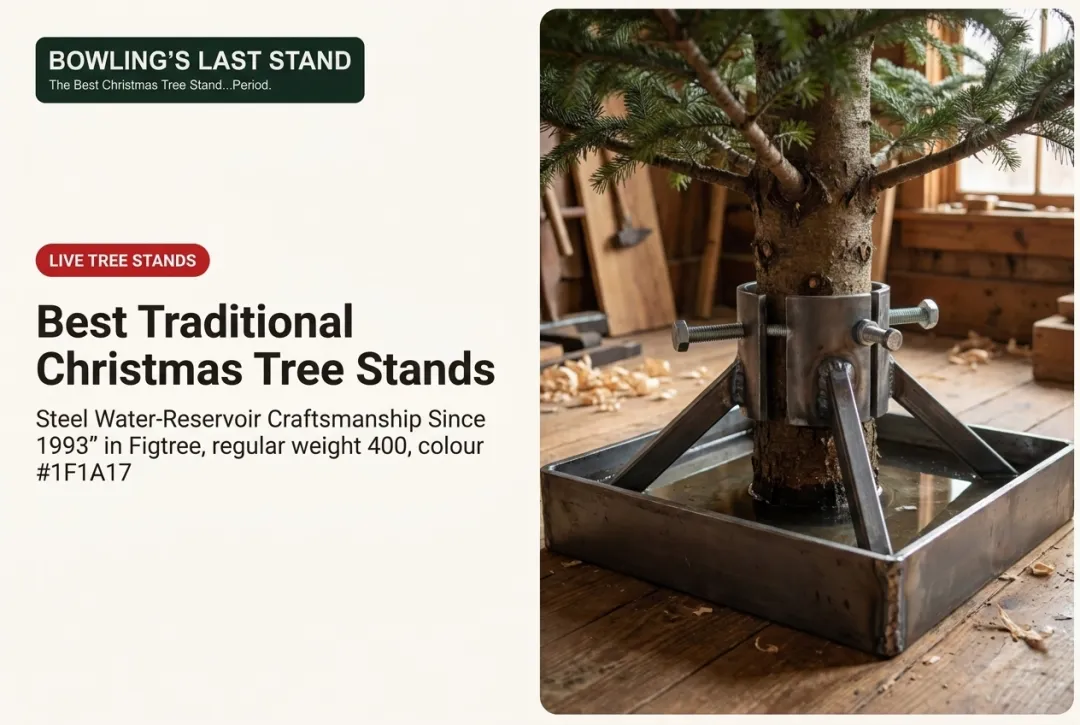
Bowling's Last Stand is a patented steel Christmas tree stand from a family-owned maker in Bear Lake, Michigan. Production started in December 1989 and still happens in the USA.
What sets it apart:
- Steel construction across the full model lineup
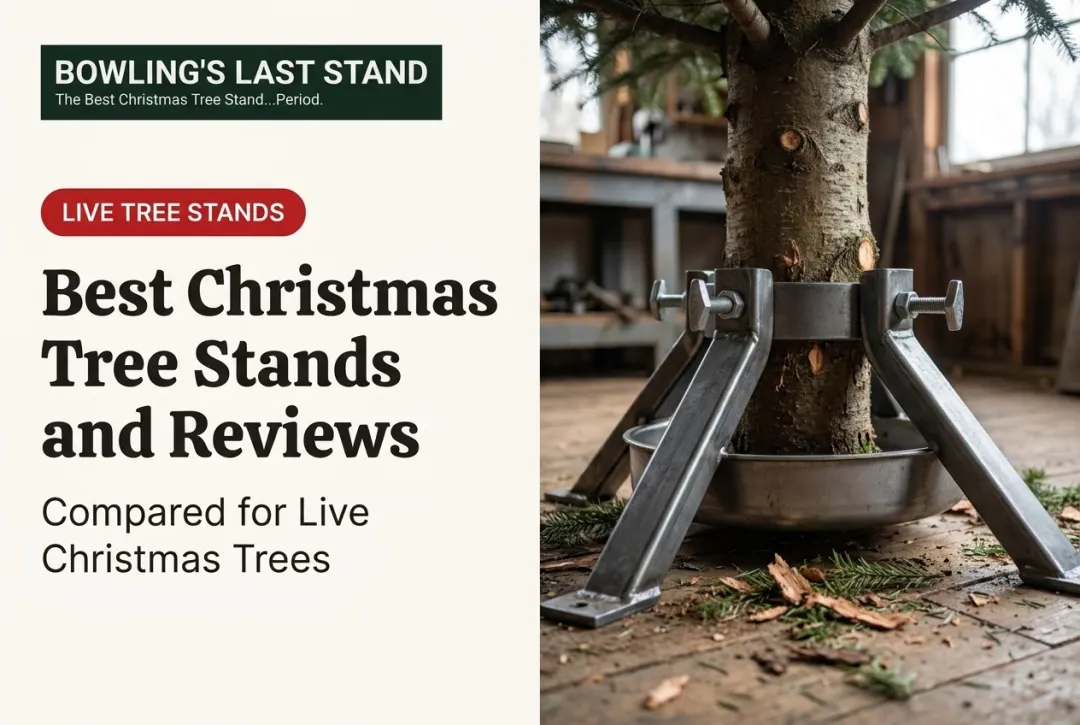
- T-bolt design that turns more easily than traditional stand screws
- Self-containing water reservoir built into each stand
- Models rated for trees from 7 feet up to 30 feet
For a pet-owning household, a properly matched model gives you a dependable, heavy base when a cat bumps a lower branch or a dog brushes past the trunk. That said, steel construction alone doesn't stop a cat from climbing into the upper branches. Anchoring and supervision still matter.
| Model | Max Tree Height | Reservoir Capacity | Stand Weight | Tightening Mechanism |
|---|---|---|---|---|
| 6XTS | 7 ft | 2.25 gal | 15 lb | 3 T-handles + lag bolt |
| 8XTS | 9 ft | 1.2 gal | 20 lb | 3 T-handles + lag bolt |
| 10XTS | 12 ft | 2.25 gal | 30 lb | 3 T-handles + lag bolt |
| 12XTS | 20 ft | 4 gal | 66 lb | 4 T-handles + 4 leg bolts |
| 16XTS | 30 ft | 6.5 gal | 107 lb | 4 T-handles + 4 leg bolts |
The manufacturer doesn't publish a trunk-diameter spec across the line, so confirm fit with your tree's actual trunk before ordering. The 6XTS, 8XTS, and 10XTS require drilling a 1/2-inch hole about 2 inches deep into the trunk base; the 12XTS and 16XTS need a 1-inch hole at the same depth.
Buying note: Pick the model that matches your tree's actual height, not the largest one available. A 16XTS is overkill—and less stable in practice—for a 7-foot tree it was never designed around.
A Heavier-Duty Steel Alternative
The Goliath GTS-728 is another steel option worth comparing. Key specs:
- Powder-coated steel for live trees 5 to 12 feet
- 28-inch leg span; 7-inch max trunk diameter
- 0.9-gallon reservoir; four steel support screws with end caps
- Removable legs for storage
For a cat-owning home, the wide leg span adds lateral stability against sideways bumps. The reservoir is small relative to some steel stands, so you'll refill more often. There's no built-in cover—block pet access to the water separately.
A Traditional Manual-Bolt Stand
The Cinco Classic C-148 is a standard manual-bolt stand: a plastic basin with captive nuts and bolts.
- Real trees up to 10 feet
- Weight: 5.25 pounds
- Reservoir: 1.75 gallons
Manual tightening can produce a solid, centered fit, but it takes more patience than a clamp system—often two people, one steadying the tree while the other turns the bolts. For pet households, the light base matters: a 5-pound stand offers far less resistance to a determined climber than a 20-pound steel stand.

An Easy-Setup Quick-Clamp Stand
The Krinner Tree Genie XXL uses a foot-pedal mechanism instead of bolts. According to the manufacturer's user instructions:
- Trees up to 12 feet; trunks up to 7 inches
- 20-inch base; 2.5-gallon reservoir
You set the trunk on a center spike, press the pedal until the claws grip, then lock the pedal.
One limitation: Krinner specifies naturally grown trees only—this model isn't approved for artificial setups.
The pedal-lock is a plus for pet households: no exposed bolts for a curious paw. The wide base resists sideways tipping reasonably well, though you should still block or cover the reservoir.
A Compact Stand for Smaller Trees
If you're working with a tabletop or short tree, the Cinco Advantage C-163 is built for that scale:
- Real trees up to 4 feet; trunks up to 3 inches
- Footprint: 12 x 12 x 5 inches
- Reservoir: 0.75 gallons; weight: 1 pound
It suits apartments, small rooms, or first-time small-tree setups. Don't exceed its limits. A taller or heavier tree will overwhelm a 1-pound base quickly.
A smaller tree reduces fall height if it tips, but cats still find compact trees interesting. Use secure placement and supervision regardless of size.
How We Chose the Best Cat and Pet-Proof Christmas Tree Stands
Use this checklist to judge any stand the same way we did.
- Compare manufacturer specs directly — height limit, trunk diameter, reservoir capacity, and materials from published data, not marketing claims.
- Measure your tree first — height, trunk diameter at the insertion point, and approximate weight — then match those numbers to the stand’s max ratings and insertion depth.
- Score stability features — base width, stand weight, trunk-grip method, and whether it works with a wall or ceiling anchor.
- Check water management on live-tree stands — reservoir size, spill resistance, refill access, and whether you can add a cover or barrier so pets can’t drink from it.
- Factor in real-world setup — one-person vs. two-person assembly, bolt access, and how quickly you can straighten or remove the tree with a pet underfoot.

Common mistakes to avoid:
- Choosing by height alone and ignoring trunk diameter
- Exceeding the stand’s rated weight or height limit
- Skipping anchors because the stand “feels heavy enough”
- Assuming steel construction alone makes a tree pet-safe
No checklist makes a tree fully cat-proof. Used together, these checks still give you a clearer read on which stands hold up better in real homes with pets.
Conclusion
The best Christmas tree stand for a home with cats or other pets is the one that matches your tree's actual dimensions, grips the trunk securely, keeps water contained, and fits into a broader safety plan.
That plan should include:
- Corner or low-traffic placement, away from furniture a cat could jump from
- Wall or ceiling anchoring for climbing cats
- A covered or blocked water reservoir
- Protected electrical cords
- Shatterproof ornaments instead of glass
- Tinsel and long ribbon kept out of reach
If you're shopping for a steel stand sized to a specific tree height, compare Bowling's Last Stand models to your tree's height and trunk measurements. Confirm current specifications with the company before you commit to a size.
Frequently Asked Questions
What are some safe alternatives to a Christmas tree if I have cats?
Consider a tabletop tree, a wall-mounted tree display, or a small artificial tree behind a barrier. A decorated cat tree can work as a holiday climbing spot if decorations stay secure and free of ingestible hazards.
Can a heavy Christmas tree stand stop a cat from knocking over the tree?
A heavy, correctly sized stand improves stability, but it can't guarantee the tree stays upright. Pair it with anchoring, strategic placement, and supervision, especially for highly active climbers.
How can I keep my cat from drinking Christmas tree stand water?
Cover or block the reservoir, skip additives unless a vet confirms they're safe, and change accessible water regularly. ASPCA guidance notes tree water can contain fertilizers and bacteria that cause stomach upset if ingested.
Is a real or artificial Christmas tree safer for cats?
Both carry risks. Real trees have needles and tree water; artificial trees can shed breakable plastic or aluminum pieces. Construction, placement, decoration choices, and supervision matter more than the tree type itself.
What Christmas tree decorations should I avoid around cats?
Skip tinsel, long ribbon, glass ornaments within reach, loose hooks, fake snow, edible decorations, and dangling cords. Choose durable, securely attached alternatives instead.
Should I anchor my Christmas tree if I have a cat?
Yes, especially if your cat climbs, jumps, or can reach the tree from nearby furniture. Use a secure wall or ceiling attachment, and make sure the anchor line itself doesn't create a separate hazard.