This guide walks you through finding a farm or lot near you, comparing cut-your-own versus pre-cut options, picking a tree that will actually survive the season, and setting it up so it stays upright and hydrated through New Year's Day. Whether you're hauling a 7-foot Douglas fir or a 20-foot showpiece for a lobby, the basics are the same: measure first, verify details with the seller, and plan for water.
Key Takeaways
- Choose-and-cut farms offer a field experience; lots and garden centers typically sell pre-cut trees for convenience.
- Confirm 2026 hours, inventory, payment options, and available services before you drive out.
- Measure your ceiling, doorway, vehicle, and stand before you fall in love with a tree.
- A properly sized, water-holding stand is what keeps a real tree standing and hydrated all month.
Christmas Tree Farms vs. Christmas Tree Lots
Not every green space with trees for sale operates the same way. Knowing the difference saves a wasted trip.
Four common formats:
- Choose-and-cut farms – Walk the field, pick a standing tree, and cut it yourself (or have staff do it)
- Farms selling pre-cut trees – Same property, but trees are already harvested and displayed near a barn or stand
- Permanent garden centers – Year-round retailers that bring in cut trees seasonally, often shipped from growing regions like North Carolina
- Seasonal pop-up lots – Temporary roadside or parking-lot setups that appear around Thanksgiving and disappear by Christmas
Some operations blend categories. Peterson's Riverview Nursery, for example, sells both standing choose-and-cut trees and pre-cut options near its barn, so one visit can satisfy either preference.
Which Format Fits Your Trip
| Shopper type | Likely best fit |
|---|---|
| Families wanting a full outing | Choose-and-cut farm |
| Quick, convenient purchase | Pre-cut lot or garden center |
| Specific species request | Choose-and-cut farm or specialty lot |
| Large or oversized tree | Farm or garden center with heavy-duty handling |
Services Worth Checking
Not every seller offers the same extras. Ask about:
- Saws and field transport (wagons, sleds)
- Shaking to remove loose needles and debris
- Baling or netting for the drive home
- Loading assistance or delivery
- Fresh trunk cuts and drilling for your stand
- Wreaths, hot cocoa, or other seasonal add-ons
Krueger's Christmas Tree Farm, for instance, shakes and wraps trees selected from its retail lot — a service you shouldn't assume every lot provides. Always ask before you load up.
Finally, check whether trees are grown on-site, shipped in from another farm, pre-cut, or balled and burlapped. A listing that's vague on this point is worth a phone call before you drive out.
How to Find Christmas Tree Farms and Lots in 2026
Finding a reliable, currently operating farm or lot takes a bit more than a quick map search.
Start with these sources:
- State agriculture department directories
- Christmas tree grower associations (state and national)
- Farm websites and verified social media pages
- Local business directories and map listings
The National Christmas Tree Association's tree locator lets you filter by choose-and-cut or pre-cut format and search by name or location nationwide. State-level groups like the Michigan Christmas Tree Association, North Carolina Christmas Tree Association, and Christmas Tree Farmers Association of New York maintain similar filtered directories.
Verification Checklist
Before you plan a trip, confirm:
- Opening and closing dates for the 2026 season
- Daily hours, since many farms operate weekends only
- Inventory status (some popular species sell out early)
- Tree height range and species carried
- Accepted payment methods (cash-only is common at smaller lots)
- Whether reservations are required for choose-and-cut slots
Search phrases like "choose-and-cut Christmas tree farm," "pre-cut Christmas tree lot," "Christmas tree delivery," or "large Christmas trees" plus your city or state will surface current local options faster than generic searches.
Seasonal variables to expect:
- Drought conditions
- Early sellouts
- Limited weekend-only hours
- Road closures
These can shift farm operations year to year. A 2025 survey of 43 wholesale growers (representing roughly half to two-thirds of U.S. real tree supply) found 79% expected to sell the same number of trees or more compared to 2024. National supply should hold steady heading into 2026, but local tightness can still happen. Confirm inventory directly with the seller rather than assuming availability.

When comparing listings, weigh distance against tree size, species, family activities, accessibility, delivery range, and post-purchase services. Proximity alone isn't the whole picture.
How to Choose the Right Real Christmas Tree
Picking a tree starts before you reach the farm: confirm fit, choose a species, then check freshness.
Measure First
- Ceiling height minus a few inches for the topper
- Floor width free for the full branch spread
- Doorway and stair dimensions the tree must clear
- Vehicle capacity so the tree fits for the ride home
- Stand rating for maximum trunk diameter and tree height
Skipping this step is the most common regret buyers report after getting home.
Species Differences
Firs, pines, and spruces each behave differently indoors:
| Species | Needles | Retention | Scent & branches |
|---|---|---|---|
| Fraser fir | Short, dark green | Excellent | Fragrant, stiff branches |
| Balsam fir | Flat, rounded tip | Long-lasting | Strong fragrance, full form |
| Douglas fir | Soft, 1–1.5 inches | Moderate | Fragrant, softer branches |
| Scotch pine | Stiff, ~1 inch | Excellent | Open form, aroma lasts |
| Blue spruce | Stiff, sharp | Good for a spruce | Sharp to handle |
These characteristics come from university extension comparisons rather than any single farm, so ask your seller which species they carry and how they perform in your climate.
Freshness Checklist
Before buying, check for:
- Flexible needles that don't snap or feel brittle
- Healthy, consistent color (no browning patches)
- Resilient branches that spring back when bent
- A clean, sticky trunk cut
- Minimal shedding beyond normal inner-needle drop
NC State Extension notes that moisture and handling matter more than cutting date alone, so a tree cut three weeks ago that's been stored properly can outlast one cut yesterday and left in direct sun.

Walk around the tree from multiple angles, especially if it will sit in a corner or near a window where only certain sides show.
For tall or wide trees, check trunk diameter, branch weight, and stand capacity. A 12-foot tree needs far more support than a 7-footer.
Before you pay, ask the seller which services they include:
- Fresh cut on the trunk base
- Base drilled to fit your stand
- Loose debris shaken out
- Baling for transport
- Loading or hold-for-pickup
Plan Your Visit and Get the Tree Home Safely
A little prep prevents a scraped bumper or a tree that arrives half-dismantled.
Pack for the trip:
- Weather-appropriate clothing and gloves
- Your measurements (written down, not just remembered)
- Rope or ratchet straps
- A blanket or tarp to protect your vehicle's roof or interior
- Your preferred payment method, including cash as backup
AAA recommends carrying a tree inside a vehicle like an SUV or minivan when a roof rack isn't available, rather than strapping it to a bare roof. If you do transport on the roof, take a few precautions:
- Request netting from the seller before loading
- Protect the paint with a blanket under the trunk
- Orient the trunk toward the front of the vehicle
- Secure the base, center, and top with rope or straps anchored to fixed tie-down points
- Tug from several angles to confirm it's tight before you drive
Once home:
- Let a very cold tree acclimate in a garage or porch briefly if possible
- Make a fresh, straight cut at the base if the seller recommends one
- Get it into water immediately
- Keep it away from fireplaces, radiators, and heat vents
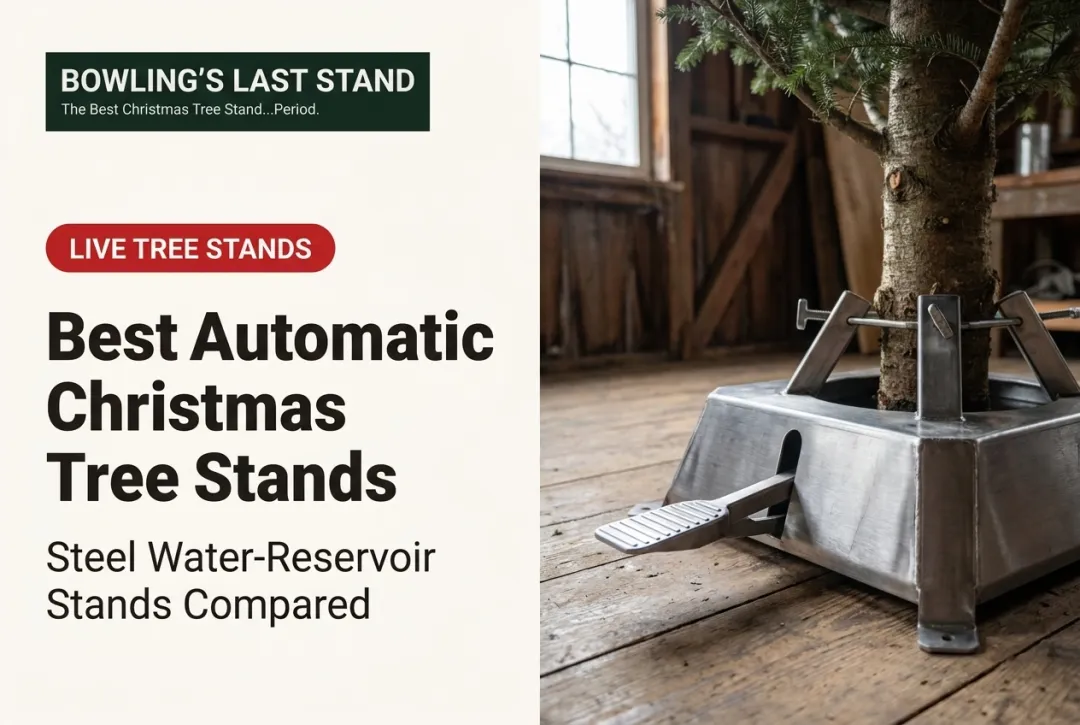
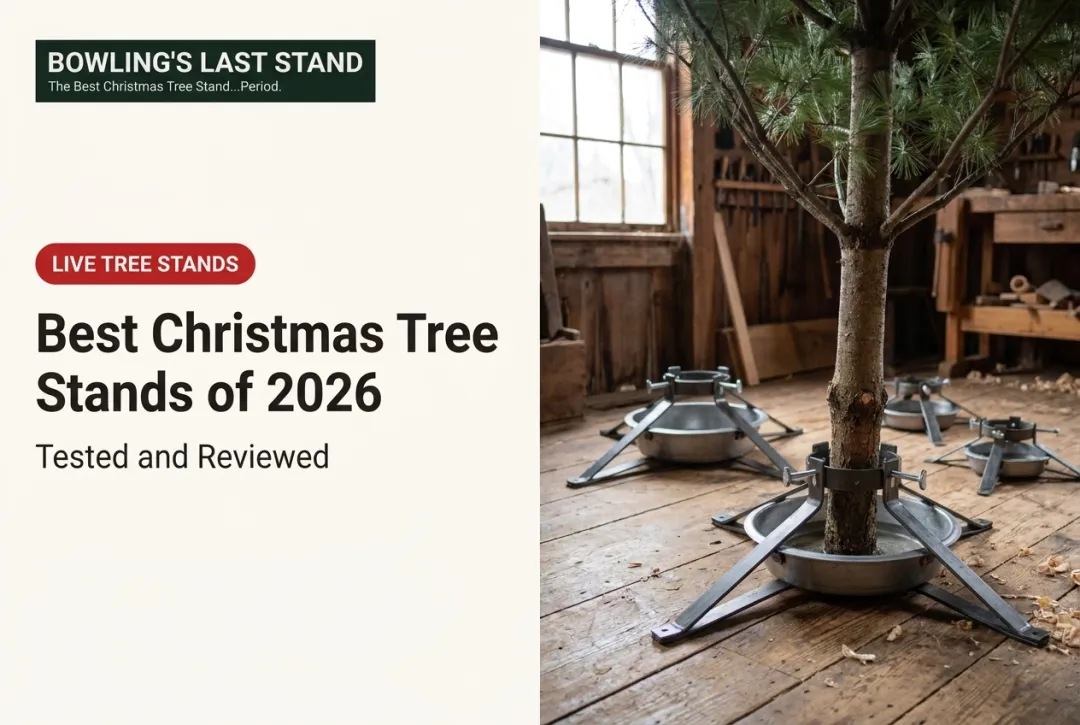
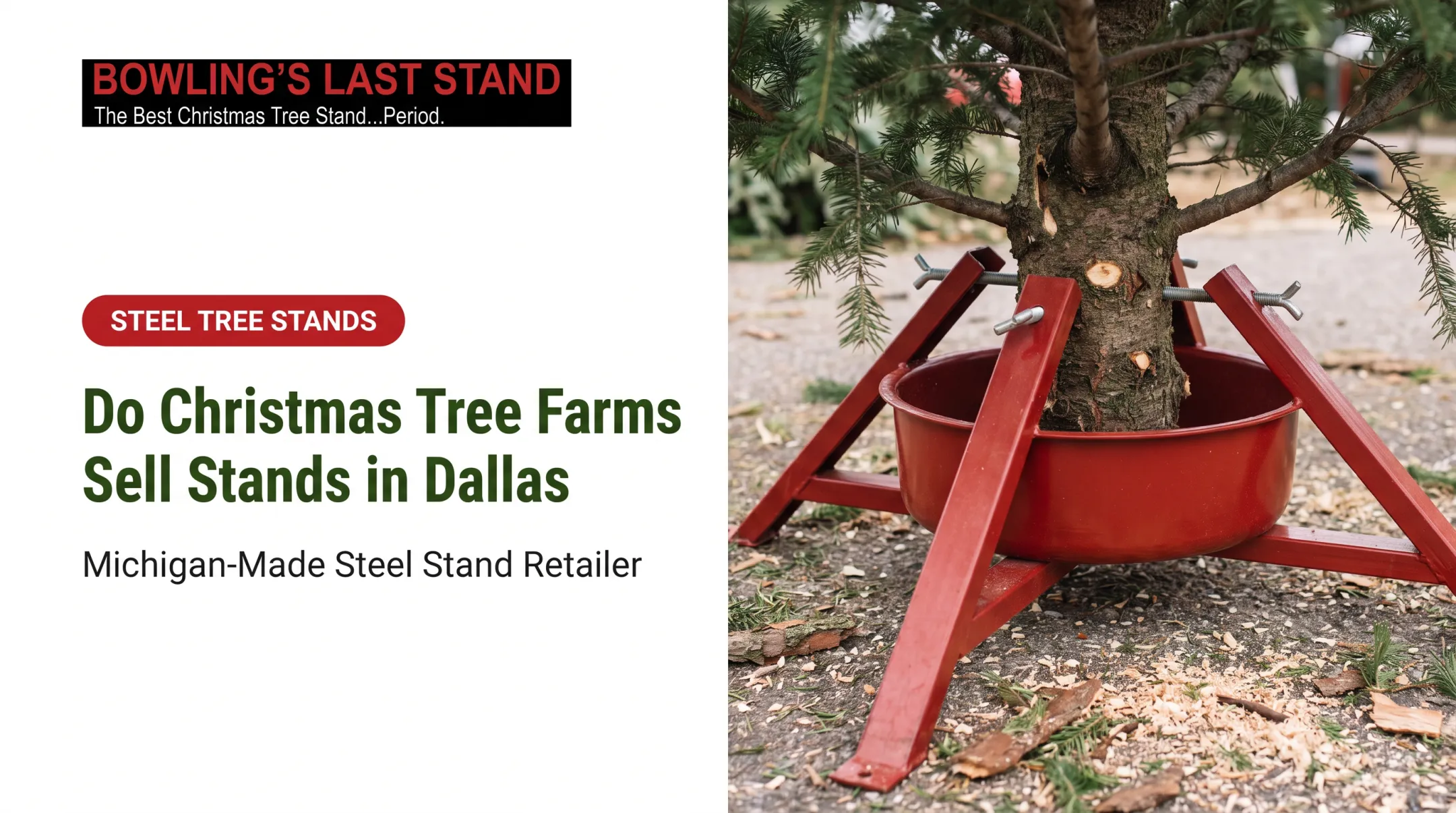
A stand with a large water reservoir, such as a steel Bowling's Last Stand model, helps keep the trunk hydrated and the tree stable indoors.
Ask ahead about shaking, netting, loading help, delivery, installation, or recycling — not every location offers all of these, so confirm specifics when you call.
How to Set Up and Secure Your Tree at Home
This is where a lot of otherwise great trees go wrong. A tree that leans, dries out, or tips over usually comes down to setup, not the tree itself.
Match the Stand to the Trunk
Your stand needs to fit the trunk's actual diameter and the tree's height and weight. Resist the urge to shave the trunk sides down to fit a too-small stand. Shaving interferes with both secure fitting and water uptake.
National Christmas Tree Association guidance recommends a stand sized to hold roughly a quart of water per inch of trunk diameter.
Tree height and weight also drive stand selection. Bowling's Last Stand, a Michigan manufacturer of steel tree stands since 1989, offers models for common home trees and larger displays:
| Model | Max tree height | Water capacity | Weight |
|---|---|---|---|
| 8XTS | 9 ft | — | 20 lbs |
| 10XTS | 12 ft | 2.25 gal | — |
| 12XTS | 20 ft | 4 gal | 66 lbs |
| 16XTS | 30 ft | 6.5 gal | 107 lbs |

The company's setup instructions call for a straight bottom cut on the trunk rather than an angled or pencil-point cut. An angled cut dehydrates the tree faster.
Larger models (12XTS and 16XTS) require drilling a 1-inch hole about 2 inches deep into the trunk base. Do not use the T-bolts as levers.
Placement and Hydration
- Choose a stable, level spot away from fireplaces, radiators, vents, and high-traffic paths
- Leave clearance for decorations and for people to walk past safely
- Keep the tree at least 3 feet from heat sources, per NFPA guidance
Water matters more than most people expect. Michigan State University Extension notes that a typical 7-foot tree with a 3-inch trunk diameter can take up to 3 quarts of water daily. Stand capacity and daily consumption are two different numbers. A stand can hold several gallons but still needs refilling often in the first week.
For taller trees, review the stand's weight capacity, the tree's center of gravity, and room conditions before adding lights or ornaments. Spreading decorations evenly around the tree helps keep weight balanced and reduces leaning, a point Bowling's Last Stand instructions specifically emphasize.
Quick Maintenance Checklist
- Check stability daily, especially in the first week
- Monitor water levels and refill as needed; never let the reservoir run dry
- Route electrical cords away from walkways and away from the water reservoir
- Keep pets and young children from pulling on branches or drinking stand water
- Remove the tree once needles become excessively dry or brittle
Frequently Asked Questions
Where can I buy a Christmas tree stand for a real tree?
Real-tree stands are sold at Christmas tree farms, garden centers, seasonal lots, hardware stores, and online. Match trunk size and height before you buy; Bowling's Last Stand makes steel water-reservoir stands for trees from 7 to 30 feet.
What is the difference between a Christmas tree farm and a Christmas tree lot?
Farms often offer a choose-and-cut, field-based experience, while lots typically sell trees that are already harvested for quicker pickup. Some farms offer both formats on the same property.
When should I visit a Christmas tree farm or lot in 2026?
Check the seller's confirmed 2026 opening dates and visit early in the season, especially if you want a specific species or size that might sell out.
How do I know if a real Christmas tree is fresh?
Look for flexible needles, healthy color, resilient branches, and a clean trunk cut with minimal shedding. Confirm handling and storage details with the seller rather than relying on cutting date alone.
What should I bring when buying a Christmas tree?
Bring measurements, gloves, weather-ready clothing, and your preferred payment method. Pack rope or straps and use a vehicle or covering that can safely haul the tree home.
How do I keep a real Christmas tree upright and watered?
Use a properly sized water-reservoir stand on a level surface away from heat sources. Water promptly after setup, check levels daily, and follow current fire-safety guidance for placement.